A professional information and consulting platform for agriculture, forestry, animal husbandry, fishery and related light industry sectors;

Horticulture Products Market Segments Explained: Where Demand and Margins Are Growing





The horticulture products market is evolving quickly as demand shifts across fresh produce, ornamental plants, protected cultivation inputs, and value-added segments. For business evaluators, understanding where volume growth aligns with stronger margins is essential for identifying viable opportunities, assessing competitive positioning, and tracking sector trends that influence investment, sourcing, and long-term market potential.
For decision makers across agriculture, forestry, fisheries, sideline processing, and light industry supply chains, the key question is no longer where horticulture demand exists, but which segments convert demand into repeatable profits. Volume can be misleading when perishability, logistics losses, input inflation, and fragmented distribution compress returns.
A practical evaluation of the horticulture products market requires segment-by-segment analysis. Fresh vegetables, fruit seedlings, cut flowers, greenhouse films, irrigation systems, potted plants, frozen or dried horticultural goods, and nursery materials all behave differently in pricing cycles, working capital needs, and risk exposure. That is where business assessment becomes more precise.
How the horticulture products market is dividing into high-volume and high-margin tracks
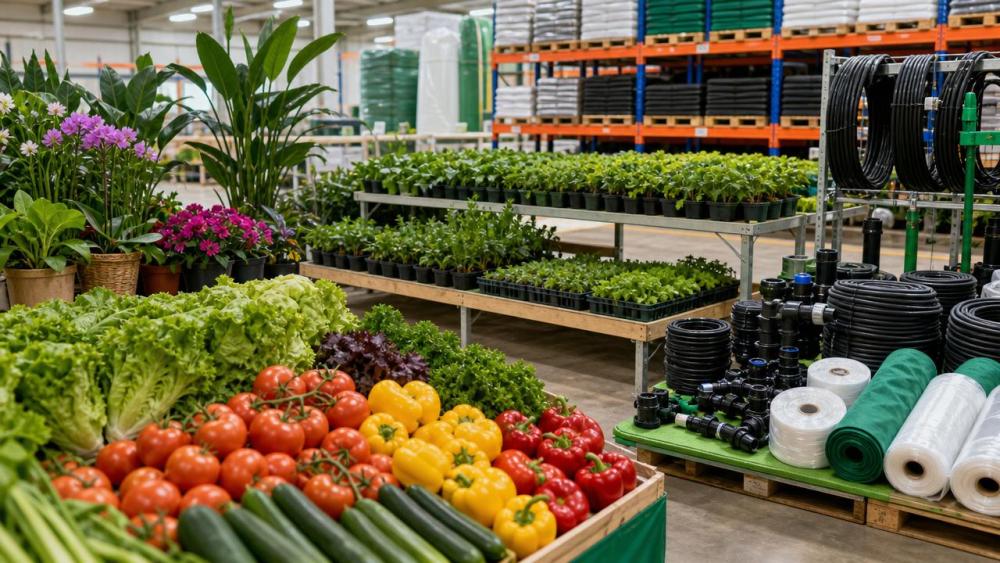
The horticulture products market is no longer a single demand pool. It is increasingly split between scale-driven commodities and specialized segments that command better margins through quality control, season extension, branding, or technical barriers. In many regional markets, the difference between these tracks can reach 8% to 20% in gross margin.
For business evaluators, this split matters because revenue growth alone does not explain long-term viability. A supplier moving 200 tons of open-field vegetables per month may earn less than a nursery selling lower-volume, higher-value planting materials with 30- to 90-day order cycles and stronger customer retention.
Commodity horticulture still matters, but efficiency decides returns
Commodity lines such as leafy vegetables, tomatoes, onions, melons, and standard fruits remain the largest part of the horticulture products market in volume terms. These segments benefit from year-round demand, broader buyer bases, and simpler customer education. However, they also face the highest exposure to weather disruption, price swings, and post-harvest loss.
In practical terms, a 3% to 7% increase in transport loss or spoilage can erase already thin margins. That is why evaluators should examine cold-chain access, harvest scheduling, packaging standards, and local distribution radius before treating high-volume categories as attractive growth areas.
Typical pressure points in volume-led categories
- Short shelf life, often 2 to 10 days for fresh-cut or delicate products
- Higher labor dependence during harvest, grading, and packing
- More frequent price corrections within 7-day to 30-day windows
- Lower room for premium pricing unless traceability or certification is clear
Specialized horticulture segments are gaining pricing power
Higher-margin areas of the horticulture products market often include seedlings, grafted plants, ornamental plants, greenhouse inputs, substrate materials, microgreens, herbs, berries, and processed horticultural goods. These categories tend to benefit from differentiation, technical handling requirements, and more deliberate procurement behavior.
Compared with standard produce, specialty products can support premium ranges of 10% to 35% when quality consistency, survival rate, varietal performance, or off-season supply is proven. Their customer base may be narrower, but contract stability is often stronger, especially in professional growing operations and institutional procurement.
The table below outlines how major segments in the horticulture products market typically compare in terms of demand profile, margin potential, and operational complexity.
A clear pattern emerges: the strongest margin opportunities in the horticulture products market often come from products that solve a production problem, shorten a supply gap, or deliver a measurable quality advantage. Products competing only on bulk tonnage usually need scale, route density, and disciplined cost control to remain attractive.
Where demand is growing fastest across practical horticulture categories
Not all growth in the horticulture products market comes from consumer preference alone. A large share is being driven by structural shifts: urban retail formats, protected farming investment, tighter residue requirements, rising demand for stable year-round supply, and interest in products that travel better or store longer.
Fresh and minimally processed produce remains the entry point
Fresh produce remains the largest traffic generator in the horticulture products market. Buyers value stable specifications, weekly availability, and manageable landed cost. Segments with frequent turnover, such as salad vegetables, mushrooms, herbs, and fresh fruit packs, are especially attractive to wholesalers and foodservice channels.
However, the stronger opportunity often lies in products with one additional layer of value. Washing, grading, retail-ready packing, or simple trimming can add 5% to 15% in realizable price if shrink rates stay under control and shelf presentation improves.
Protected cultivation inputs are benefiting from modernization
Films, nets, drip systems, seed trays, growth substrates, ventilation components, and irrigation controls are a less visible but increasingly important part of the horticulture products market. Demand for these products rises when growers try to stabilize output, reduce water use, or move into higher-value crops.
A greenhouse upgrade project may involve a 2- to 8-week procurement cycle, several supplier comparisons, and a heavier focus on service life than on unit price alone. That creates room for better margins when vendors provide technical guidance, compatible configurations, and reliable replenishment.
Growth signals evaluators should watch
- Increased inquiry volumes for off-season production materials
- More requests for drip irrigation or substrate systems rather than single components
- Longer-term supply agreements for nursery consumables and replacement parts
- Buyer interest in products that reduce labor inputs by 10% or more
Ornamentals and nursery materials offer selective upside
Ornamental plants, landscaping stock, potted flowers, and tree seedlings do not move like commodity produce. Demand can be seasonal, project based, or linked to festivals, urban greening, hospitality, and household decoration. Yet these categories often reward quality differentiation more clearly than edible crops.
In the horticulture products market, ornamental demand becomes especially attractive when suppliers can standardize height, pot size, color stage, or transplant success. A buyer may accept a higher unit cost if rejection rates fall from 8% to 3% or if shelf display life extends by 2 to 4 days.
How to evaluate margins beyond headline sales numbers
Business evaluators should avoid measuring the horticulture products market by sales turnover alone. A segment with rapid invoice growth may still underperform if it requires excessive working capital, suffers frequent claims, or depends on unstable spot-market buying. Margin quality matters as much as margin percentage.
Four core indicators that reveal segment health
A practical assessment usually starts with four indicators: average order frequency, spoilage or rejection rate, replenishment cycle, and pricing resilience. Together, these can show whether a category supports repeatable business or only temporary revenue spikes.
- Order frequency: daily, weekly, seasonal, or project-based
- Waste or rejection: common threshold ranges from below 3% to above 10%
- Replenishment cycle: 3 days, 14 days, 30 days, or longer
- Pricing resilience: ability to hold price during supply fluctuations
Working capital and service burden can reshape profitability
Some segments in the horticulture products market look attractive until after-sales support, replacement risk, and payment terms are included. Nursery products may require technical claims handling. Input products may need installation guidance. Fresh produce may involve rapid settlement but frequent quality disputes.
That means evaluators should calculate margin after at least five cost layers: procurement, packing, transport, claims, and financing. In many cases, the true difference between segments appears only after these adjustments are applied over a 30- to 90-day operating cycle.
The comparison below helps translate segment characteristics in the horticulture products market into more realistic commercial evaluation criteria.
The best opportunities often balance three conditions at once: recurring demand, manageable losses, and a clear reason buyers cannot easily switch. In the horticulture products market, segments meeting all three criteria usually outperform businesses built only around seasonal price spikes.
Common risks, buyer mistakes, and smarter segment selection
Even experienced teams can misread the horticulture products market when they focus too heavily on visible demand. Procurement and investment decisions are often weakened by underestimating perishability, overestimating local market depth, or ignoring the difference between nominal price and net realized margin.
Frequent assessment mistakes
- Assuming the fastest-growing category is automatically the most profitable
- Ignoring losses during packing, transit, and short-term storage
- Evaluating input products without checking replacement demand and service burden
- Comparing wholesale and retail-ready products without adjusting for labor and packaging costs
A practical 5-step selection framework
A disciplined review process can make the horticulture products market easier to navigate. Business evaluators can use a 5-step framework to compare segments before committing sourcing capital, partnership resources, or market development time.
- Define the target channel: wholesale, retail, project, export, or input distribution
- Measure delivery sensitivity: same day, 72 hours, 2 weeks, or seasonal
- Estimate total margin after loss, claims, and financing adjustments
- Check supplier consistency across at least 2 to 3 production cycles
- Match product complexity with your team’s technical and operational capacity
Who benefits most from this approach
This framework is especially useful for trading companies, procurement teams, agribusiness investors, supply chain coordinators, and commercial analysts serving the broader agriculture and light-industry ecosystem. It is designed to turn broad interest in the horticulture products market into segment-level decisions with clearer commercial logic.
The horticulture products market offers real growth, but the strongest opportunities usually sit where supply discipline, technical value, and channel fit come together. Fresh produce can deliver scale, while seedlings, ornamentals, protected cultivation inputs, and value-added goods may offer stronger margins when quality and service are managed well.
For business evaluators, the most useful lens is not simply asking which segment is growing, but which segment can hold price, control losses, and generate repeat orders over 30-, 60-, and 90-day cycles. That is the difference between temporary momentum and sustainable commercial performance.
If you want a more targeted view of the horticulture products market across supply, pricing, trade developments, and segment-specific opportunities, contact us to discuss your sourcing priorities, request a tailored market assessment, or learn more solutions for your business strategy.
Related News
- 00
0000-00
Bioreactor Market Share by Manufacturer: How to Compare Leaders by Capacity and End Use - 00
0000-00
Organic Agriculture News 2023: What Certification Updates and Input Rules Changed? - 00
0000-00
Agriculture Industry News: Which Policy, Input Cost, and Export Trends Matter Most? - 00
0000-00
Animal Feed Types Explained: How to Choose Feed for Poultry, Cattle, and Swine - 00
0000-00
What Is Organic Farming and How Does It Differ From Conventional Agriculture?
Dr. Elena Bio
Weekly Insights
Stay ahead with our curated technology reports delivered every Monday.
News Recommendations
The five pillar industries provide end-to-end industry intelligence.
 Author :Lina CleanCBE 2026 Highlights Export Compliance for Cleanroom TechCBE 2026 highlights export compliance for cleanroom tech, covering CE/FDA support, overseas warehousing, and logistics coordination for GMP, FFU, HEPA, and static control exports.
 Author :Dr. Aris ChemAUD Falls as Australia Tenders Speed UpAUD Falls as Australia Tenders Speed Up: see how weaker AUD, new infrastructure funding, and AS/NZS 4858 & ISO 12944 compliance may reshape supplier bids, exports, and project readiness.
 Author :Marcus AeroCAD Drop Tightens Canada Export PricingCAD Drop Tightens Canada Export Pricing: see how a weaker Canadian dollar is raising landed costs for Titanium Fasteners and Structural Adhesives, tightening quotes, contracts, and delivery planning.
 Author :Dr. Elena BioColombo Expo Opens With Focus on Parts and ElectronicsColombo Expo Opens With Focus on Parts and Electronics highlights Sri Lanka Expo 2026 opportunities in electronics, automotive parts, pharma, and cleanroom supply matching. Explore export leads now.
 Author :Marcus AeroITC Opens GPU/DPU 337 Probe, Raising Export Compliance RisksITC Opens GPU/DPU 337 Probe, raising export compliance risks for AI servers, edge computing, and industrial control supply chains. Learn key IP, sourcing, and contingency actions now.
 Author :Vibration AnalyzersAgriculture Forestry Livestock Fishery News: What Market Signals Should Buyers Track?Agriculture forestry livestock fishery news reveals key market signals buyers should track, from price and policy shifts to logistics and supplier risk, helping you source smarter and act before costs rise.
 Author :Lina CleanHEPA Filter Manufacturer Comparison: Which Certifications and Test Data Matter Most?HEPA filter manufacturer comparison guide: learn which certifications, leak tests, pressure drop data, and traceability records matter most for reliable performance and smarter sourcing.
 Author :Lina CleanCleanroom Sticky Mat Factory Selection: Material, Peel Strength, and Contamination ControlCleanroom sticky mat factory selection starts with material quality, peel strength, and contamination control data. Learn how to compare suppliers for safer, cleaner, more reliable performance.
 Author :Dr. Aris ChemHow to Evaluate a Chemical Delivery System Factory for Dosing Accuracy and Safety ComplianceChemical delivery system factory selection starts with dosing accuracy and safety compliance. Learn how to compare testing, QC, and support to avoid risk and choose a reliable supplier.
 Author :Vibration AnalyzersAgri Supply Chain Management Explained: Key Stages, Risks, and How to Improve VisibilityAgri supply chain management explained clearly: explore key stages, major risks, and practical ways to improve visibility, traceability, and faster decision-making across agricultural operations.
 Author :Marcus AeroBOJ Rate Hike Raises Settlement Pressure on Titanium Fastener Exports to JapanBOJ rate hike raises new pressure on titanium fastener exports to Japan, from yen settlement costs to stricter JIS compliance and faster delivery demands. See what exporters must do now.
 Author :Dr. Elena BioYiwu Unit Wins Liner License for GMP System ShippingYiwu Unit Wins Liner License for GMP System Shipping, signaling better cargo space, tighter schedule control, and faster East China deliveries to the Middle East and Latin America.
 Author :Lina CleanK-REACH Revision Takes Effect for Nano Cleaning ExportsK-REACH revision takes effect for nano cleaning exports to South Korea. Learn how new pre-registration rules may disrupt imports, shipments, and compliance planning from Q3 2026.
 Author :Dr. Hideo TanakaChina Customs Raises Export Checks on Key InstrumentsChina Customs Raises Export Checks on Key Instruments: learn how stricter checks on vibration analyzers and ultrasonic level meters may affect compliance, clearance speed, and export readiness.
 Author :Lina CleanACE F865 Check Tightens HTS Matching for HEPA and FFU ImportsACE F865 check tightens HTS matching for HEPA and FFU imports. Learn who faces rejection risk, why compliance costs may rise, and what importers should review now.
 Author :Marcus AeroLightweight Material Innovations News: Which New Composites and Alloys Are Reaching ProductionLightweight material innovations news reveals which thermoplastic composites, aluminum alloys, magnesium systems, and hybrid structures are truly reaching production—and why buyers should pay attention.
 Author :Vibration AnalyzersInvestments in Sensor Startups 2026: Where Capital Is Moving and What Buyers Should WatchInvestments in sensor startups 2026 reveal where capital is flowing across agriculture, livestock, forestry, and processing. See the top signals, risks, and buying insights shaping smarter decisions.
 Author :Vibration AnalyzersSeed Industry News Explained: Which Policy, Trade, and Trait Updates Affect PlanningSeed industry news explained: discover how policy shifts, trade changes, and trait approvals can reshape sourcing, costs, and crop planning—so you can act earlier and plan smarter.
 Author :Dr. Aris ChemFarm Product News That Matters to Buyers: Price Signals, Supply Shifts, and Input RisksFarm product news helps buyers spot early price signals, supply shifts, and input risks before costs rise. Learn what to watch to protect sourcing, timing, and margins.
 Author :Dr. Elena BioBioreactor Market Share by Manufacturer: How to Compare Leaders by Capacity and End UseBioreactor market share by manufacturer is shifting beyond simple rankings. Compare leaders by capacity, end use, service reach, and process fit to make smarter buying decisions.
 Author :Dr. Hideo TanakaChina Customs Raises Checks on Key Instrument ExportsChina Customs raises checks on key instrument exports from June 2026, spotlighting vibration analyzers and ultrasonic level transmitters. Learn the document risks, compliance steps, and clearance impact.
 Author :Lina CleanK-REACH Update Tightens Nano Cleaner Exports to KoreaK-REACH update tightens Nano Cleaner exports to Korea: learn the new nano chemical pre-registration and characterization rules, customs risks, and key compliance steps for exporters.
 Author :Dr. Elena BioLangfang 2026 Matchmaking Highlights Cleanroom-Ready SupplyLangfang 2026 matchmaking spotlights cleanroom-ready supply, with strong demand for Purification Skids and Nano Clean meeting ASME BPE, ISO 14644-1, CE, and UKCA expectations.
 Author :Dr. Aris ChemPakistan Requires Forced-Labor-Free Proof for Adhesive ImportsPakistan requires forced-labor-free proof for adhesive imports. Learn how the new rule affects structural adhesives, waterproofing resins, supplier documents, and shipment compliance.
 Author :Lina CleanThailand Food Rule Tightens Compliance for Cleanroom SystemsThailand food rule changes are reshaping cleanroom compliance for GMP projects. Learn how FFU, HEPA, static control, and modular systems may impact Thai food plant approvals.
 Author :Lina CleanGlobal Semiconductor Fab Expansion 2026: Where Capacity Is Growing and Supply Chains May ShiftGlobal semiconductor fab expansion 2026 is reshaping capacity, costs, and supply chains. See where growth is accelerating and what it means for sourcing, resilience, and cross-industry planning.
 Author :Dr. Elena BioOrganic Agriculture News 2023: What Certification Updates and Input Rules Changed?Organic agriculture news 2023 explained the latest certification updates, input approval rules, and compliance risks—helping teams protect organic claims, avoid audit issues, and strengthen supplier control.
 Author :Marcus AeroAerospace Gear Tooth Precision Metrics: Key Tolerance, Runout, and Profile Terms ExplainedAerospace gear tooth precision metrics explained: learn key tolerance, runout, profile, pitch, and lead terms to assess gear quality, reduce risk, and make smarter sourcing decisions.
 Author :Dr. Elena BioAgriculture Industry News: Which Policy, Input Cost, and Export Trends Matter Most?Agriculture industry news: discover which policy shifts, input cost pressures, and export trends matter most now—and how they may reshape margins, supply chains, and market opportunities.
 Author :Dr. Elena BioAnimal Feed Types Explained: How to Choose Feed for Poultry, Cattle, and SwineAnimal feed choices affect growth, health, and costs. Learn how to choose the right feed for poultry, cattle, and swine with practical tips for better performance.
 Author :Lina CleanCustoms Spot Checks Tighten Nano Clean Export ComplianceCustoms Spot Checks Tighten Nano Clean Export Compliance: learn how stricter random inspections affect batch records, labels, declarations, and shipment stability for global exporters.
 Author :Dr. Elena BioOverseas Buyers Focus on GMP Purification Skids at Shanghai ShowGMP Purification Skids drew strong overseas buyer interest at the Shanghai show, highlighting modular design, CIP/SIP validation, and FDA/EMA readiness—see what this means for global equipment sourcing.
 Author :Marcus AeroJapan Opens Cold-Rolled Steel Probe, Pressure Builds on Titanium Fastener CostsJapan opens a cold-rolled steel probe, raising titanium fastener cost pressure for exporters and buyers. See what it means for pricing, sourcing, and delivery planning.
 Author :Lina CleanEN 1822-2026 Report Rule Hits FFU and HEPA ImportsEN 1822-2026 Report Rule reshapes FFU and HEPA imports to the EU. Learn who needs compliant NANDO-listed test reports, key customs risks, and how to protect market access.
 Author :Lina CleanChina-Mongolia AEO Recognition Cuts Checks on Static Control ExportsChina-Mongolia AEO recognition cuts checks on static control exports, speeding customs clearance, simplifying documents, and improving delivery predictability for Mongolia trade.
 Author :Lina CleanHow to Choose a Cleanroom Sticky Mat Factory for Stable Quality and Bulk SupplyCleanroom sticky mat factory selection affects quality, lead time, and total cost. Learn how to compare suppliers for stable performance, scalable bulk supply, and lower sourcing risk.
 Author :Marcus AeroHow Semiconductor Shortage News Affects Lead Times, Pricing, and Sourcing PlansImpact of semiconductor shortage news shapes lead times, pricing, and sourcing plans. Learn how to protect budgets, secure supply, and reduce disruption risks.
 Author :Dr. Elena BioFruit and Vegetable Exports: Key Compliance Checks Before Entering New MarketsFruit and vegetable exports demand more than product quality. Learn the key compliance checks for market entry, from phytosanitary rules to labeling and customs, and reduce costly delays.
 Author :Dr. Aris ChemForestry Products Explained: Main Types, End Uses, and How Quality Is EvaluatedForestry products explained clearly: explore main types, end uses, and how quality is evaluated to compare options smarter, reduce sourcing risk, and make better buying decisions.
 Author :Dr. Elena BioWhat Is Organic Farming and How Does It Differ From Conventional Agriculture?Organic farming explained: discover how it differs from conventional agriculture in soil care, inputs, certification, costs, and market value for smarter decisions.