A professional information and consulting platform for agriculture, forestry, animal husbandry, fishery and related light industry sectors;

Why Poultry Feed Ingredients Vary More Than Labels Suggest





At first glance, feed labels make poultry feed ingredients seem consistent, but quality-control and safety teams know the real picture is more complex. Ingredient origin, seasonal shifts, storage conditions, processing methods, and supplier practices can all change nutritional value, contamination risk, and performance. Understanding why these differences occur is essential for stronger inspection, smarter sourcing, and more reliable feed safety management.
Why variability in poultry feed ingredients is becoming a bigger industry issue
A noticeable shift is taking place across feed and livestock supply chains: variability is no longer treated as an occasional exception. For quality-control teams, it is now a routine operating condition. The label may still list corn, soybean meal, wheat, DDGS, fats, minerals, and additives in familiar terms, yet the actual behavior of those poultry feed ingredients can differ substantially from lot to lot, season to season, and supplier to supplier.
Several industry signals explain why this matters more today. Raw material sourcing has become more global and more fragmented. Climate pressure is affecting harvest quality. Storage and logistics disruptions can extend transit times and alter moisture stability. At the same time, buyers are under stronger pressure to control costs without weakening safety standards. As a result, quality teams are being asked to make faster judgments on more variable inputs.
This trend matters not only to feed mills, but also to integrators, poultry farms, auditors, exporters, and procurement managers. When poultry feed ingredients vary beyond what a label implies, the consequences can include nutrient inconsistency, mycotoxin exposure, rancidity, pellet quality issues, reduced feed intake, and traceability gaps. In a market where performance margins are tight, small ingredient shifts can create disproportionate operational risk.
The main forces driving change behind the label
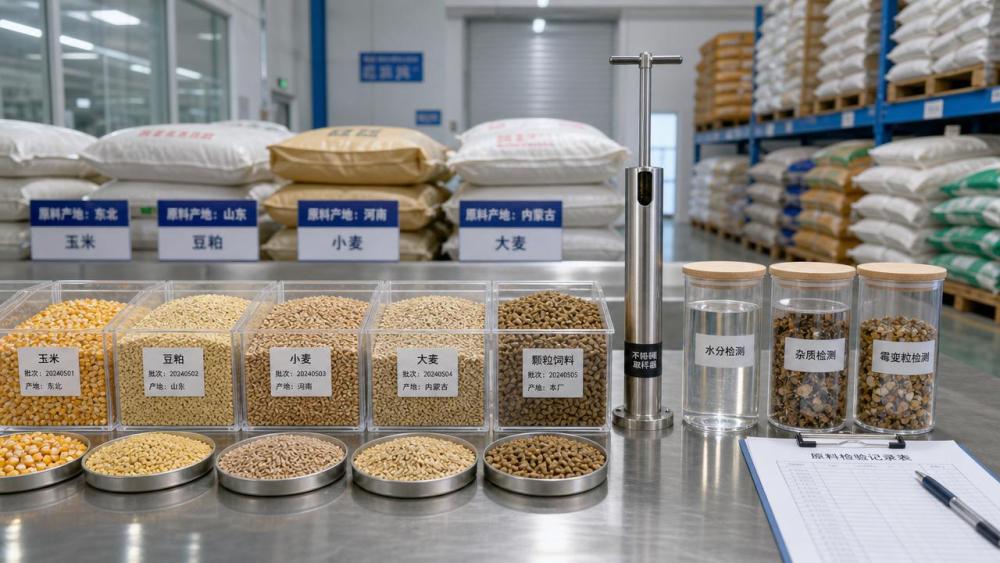
The first driver is origin diversification. A soybean meal shipment from one region may have a different protein profile, fiber level, processing history, or anti-nutritional factor load than material carrying the same name from another region. Corn sourced from different climates can vary in bulk density, starch digestibility, fungal pressure, and broken kernel percentage. Labels identify categories, but they rarely reflect the full range of physical and nutritional variation inside those categories.
The second driver is seasonal instability. Harvest timing, rainfall patterns, drought stress, and storage temperature all affect grain quality. In some seasons, poultry feed ingredients arrive with elevated moisture or a higher chance of mold development. In others, nutrient levels may be acceptable while physical integrity is poor, creating problems in grinding, mixing, or pelleting. Safety managers should view seasonality as a practical risk indicator, not just an agricultural background factor.
A third driver is processing variation. Oilseed meals, rendered products, by-products, and fats are especially sensitive to processing temperature, extraction method, oxidation control, and handling hygiene. Overheating can reduce amino acid availability. Poor fat management can increase peroxide values and shorten shelf life. Even two lots of the same declared ingredient may behave differently in the feed line because of processing differences upstream.
The fourth driver is commercial substitution. Under cost pressure, formulations may rely more heavily on alternative meals, co-products, or regionally available raw materials. This is not automatically negative; in many cases it improves supply flexibility. But it does increase the need to evaluate poultry feed ingredients based on actual risk profile rather than traditional naming. A label can show compliance while still hiding meaningful differences in digestibility, contamination potential, and operational behavior.
How the hidden variability affects different parts of the feed chain
The impact of variable poultry feed ingredients is not evenly distributed. It reaches each stage differently, from procurement to farm performance. For purchasing teams, the challenge is that a lower quoted price may conceal higher quality uncertainty, more testing costs, or inconsistent production outcomes. For quality teams, the burden is increased sampling frequency, more exceptions, and more difficult supplier comparisons. For safety managers, variability raises the odds of contamination events that do not appear clearly in routine paperwork.
On the production side, ingredient inconsistency can alter mixing behavior, particle size distribution, pellet durability, and flowability. These are often treated as technical issues inside the mill, but they are also early signals of upstream ingredient variation. Downstream, poultry producers may see changes in growth, feed conversion, litter quality, shell quality, or flock uniformity, even when the formula looks stable on paper.
Why labels alone are no longer enough for judging poultry feed ingredients
Labels are useful for regulatory declaration and broad formulation guidance, but they are not designed to communicate full operational risk. A label may confirm ingredient category, guaranteed analysis, and compliance statements, yet still leave unanswered questions about freshness, digestibility, contamination history, storage exposure, or process damage. For quality-control personnel, this gap is where most costly surprises occur.
This is especially relevant as companies seek faster supplier onboarding or broader sourcing options. The more dynamic the market becomes, the less effective a label-only mindset will be. High-performing teams increasingly use layered verification: supplier approval, historical trend review, certificate validation, incoming sensory checks, laboratory testing, and production feedback. The strategic point is clear: poultry feed ingredients should be evaluated as variable risk assets, not static named materials.
There is also a growing management expectation for traceability and preventive controls. When an issue emerges, investigators rarely stop at what the label said. They want to know where the lot came from, how it was stored, whether prior lots showed warning signs, and whether acceptance criteria were aligned with known seasonal or regional risks. That shift makes documentation quality as important as ingredient testing itself.
Signals worth watching over the next buying and audit cycles
For the next phase of market observation, several signals deserve close attention. One is wider use of alternative or blended raw materials as buyers respond to cost volatility. Another is a stronger focus on functional consistency rather than just basic proximate values. More companies are asking not only whether poultry feed ingredients meet stated protein or energy targets, but whether they behave consistently in processing and animal performance.
A second signal is increased scrutiny on storage and logistics conditions. Heat exposure, condensation, delayed unloading, and packaging integrity are becoming more important in ingredient acceptance. This is particularly relevant for fats, meals, and moisture-sensitive by-products. In many operations, the quality decision should begin before the truck is unloaded, not after a problem appears in the mill.
A third signal is the move toward more data-linked quality systems. Even where advanced digital tools are not yet fully deployed, many companies are building tighter records on supplier performance, seasonal trends, and deviation history. This allows teams to identify which poultry feed ingredients are stable, which are periodically risky, and which require elevated controls only during specific windows.
What quality and safety teams should do now
The most effective response is not to reject variability altogether, because market reality rarely allows that. The better response is to make variability visible, measurable, and actionable. Start by ranking poultry feed ingredients according to both nutritional sensitivity and contamination sensitivity. Corn and wheat may need stronger seasonal screening. Oilseed meals may require closer review of processing indicators. Fats may need stricter freshness and oxidation controls. By-products may need tighter supplier-specific limits than primary commodities.
Next, align testing plans with risk rather than habit. Routine analysis has value, but it should not consume resources that are needed for more targeted checks. If a supplier has a stable long-term profile, testing frequency may be optimized. If an ingredient category has shown recent volatility, sampling intensity should rise. This type of flexible control is often more effective than applying the same inspection depth to every lot.
Supplier communication also needs to evolve. Instead of relying only on specification sheets, ask more operational questions: What changed in sourcing region? Was the process adjusted? Were storage durations longer this month? Has there been unusual weather pressure during harvest? These details help quality teams interpret whether poultry feed ingredients that look compliant on paper are likely to behave differently in practice.
A practical decision framework for stronger control
A useful framework is to judge each ingredient lot across four dimensions: composition, safety, functionality, and traceability. Composition covers nutrient and moisture variation. Safety includes mycotoxins, microbial concerns, residues, oxidation, and foreign matter. Functionality asks whether the ingredient performs as expected in grinding, mixing, pelleting, and feeding. Traceability confirms whether records are complete enough to support rapid root-cause analysis if problems occur.
When these four dimensions are assessed together, the gap between label description and real risk becomes easier to manage. This is especially important for organizations handling multiple suppliers or mixed ingredient portfolios. It allows teams to focus attention where the change signal is strongest instead of treating all poultry feed ingredients as equally predictable.
Key takeaway for upcoming sourcing and audit decisions
The biggest industry change is not simply that poultry feed ingredients vary. It is that the business cost of ignoring that variability is rising. Competitive sourcing, climate stress, alternative raw material use, and stronger safety expectations are all widening the gap between declared ingredient identity and actual ingredient behavior. For quality-control and safety professionals, this is a clear signal to move from static compliance checks to trend-aware risk management.
If a company wants to judge how these trends affect its own operation, the most useful questions are practical ones: Which poultry feed ingredients show the largest lot-to-lot swings? Which suppliers look compliant but generate repeated process deviations? Which seasonal periods correlate with more rejections or corrective actions? Which testing steps provide real decision value, and which only confirm what is already known? The organizations that answer those questions early will be better positioned to protect feed safety, stabilize performance, and make smarter buying decisions in a more variable market.
Related News
- 00
0000-00
FDA Import Alert Adds ISO 13485 Hold for Purification Parts - 00
0000-00
FDA Tightens Entry Rules for Purification Skids - 00
0000-00
Colombo Expo Opens With Focus on Parts and Electronics - 00
0000-00
Yiwu Unit Wins Liner License for GMP System Shipping - 00
0000-00
Langfang 2026 Matchmaking Highlights Cleanroom-Ready Supply
Dr. Elena Bio
Weekly Insights
Stay ahead with our curated technology reports delivered every Monday.
News Recommendations
The five pillar industries provide end-to-end industry intelligence.
 Author :Lina CleanTÜV Rheinland adds ISO/IEC 17065 step for static control systemsTÜV Rheinland adds an ISO/IEC 17065 step for Static Control Systems, reshaping CE+EMC+ATEX certification and EU Eco-design filing. Learn what manufacturers must prepare before Sept. 1, 2026.
 Author :Marcus AeroTitanium Fastener Export Quotes Rise on Supply TightnessTitanium Fasteners export quotes rise as aerospace-grade titanium supply tightens. Explore pricing impacts, delivery risks, contract checks, and buyer documentation trends now.
 Author :Lina CleanEU Battery Rule Takes Effect: FFU and HEPA Exports Need Carbon Footprint DeclarationsEU Battery Rule takes effect in 2026: FFU and HEPA exports to EU battery cleanrooms may require carbon footprint declarations. Learn the customs risks, standards, and compliance steps now.
 Author :Marcus AeroAircraft Interior Components Wholesale: How to Compare Suppliers and MOQ TermsAircraft interior components wholesale: compare suppliers, certification, lead times, and MOQ terms to cut sourcing risk, control inventory cost, and choose partners with confidence.
 Author :Lina CleanParticle Board Industry Outlook: What Drives Raw Material Costs and Margin PressureParticle board industry outlook: discover what is driving raw material costs, margin pressure, and supplier risk, with practical insights to support smarter sourcing and planning.
 Author :Marcus AeroHow to Evaluate an Aircraft Turbine Blade Factory for Quality, Capacity, and ComplianceAircraft turbine blade factory evaluation made simple: learn how to assess quality systems, production capacity, certifications, and compliance to reduce sourcing risk and choose the right supplier.
 Author :Lina CleanTimber Industry News: 7 Market Shifts Reshaping Supply, Pricing, and DemandTimber industry news reveals 7 critical market shifts reshaping supply, pricing, and demand. See how policy, costs, and end-use trends can impact sourcing, margins, and strategy.
 Author :Vibration AnalyzersLoad Cell Creep and Hysteresis Explained: How They Affect Weighing AccuracyLoad cell creep and hysteresis explained in practical terms—learn how they impact weighing accuracy, increase process errors, and what to check when choosing reliable weighing systems.
 Author :Dr. Elena BioPSA Singapore Cuts Module Clearance to 4.2 HoursPSA Singapore cuts module clearance to 4.2 hours with AI cargo tallying. See what this means for project cargo, modular equipment, and China-Singapore-Europe logistics.
 Author :Lina CleanTÜV Rheinland Adds ISO/IEC 17065 Step for Static Control CertificationTÜV Rheinland adds ISO/IEC 17065 to static control certification, reshaping CE+TÜV Mark compliance from Oct 1, 2026. See impacts on exporters, buyers, and delivery planning.
 Author :Marcus AeroTitanium Fastener Export Prices Rise 8.3% in a WeekTitanium Fastener export prices rise 8.3% in a week to USD 89.6/kg as TC4 costs jump and lead times extend to 14–18 weeks. See what buyers, exporters, and procurement teams should do now.
 Author :Dr. Elena BioFDA Import Alert Adds ISO 13485 Hold for Purification PartsFDA Import Alert adds an ISO 13485 hold for purification parts used in GMP imports. Learn the compliance impact, shipment risks, and what importers must review now.
 Author :Lina CleanEU Battery Passport Rule Extends to Cleanroom ExportsEU Battery Passport Rule now impacts cleanroom exports earlier than many expect. Learn how the 2026 EU battery compliance step affects FFU, HEPA systems, labeling, customs, and delivery risk.
 Author :Dr. Aris ChemHow to Evaluate a Mortar Additive Manufacturer for Quality, Consistency, and Supply RiskMortar additive manufacturer selection starts with quality, consistency, and supply risk. Learn practical checkpoints to compare suppliers, reduce disruption, and choose with confidence.
 Author :Vibration AnalyzersImpact of Semiconductor Shortage News on Lead Times, Pricing, and OEM Sourcing DecisionsImpact of semiconductor shortage news reshapes lead times, pricing, and OEM sourcing. Learn how to spot risks early, compare suppliers smarter, and protect project timelines.
 Author :Vibration AnalyzersLivestock Equipment Buying Guide: How to Compare Feeding, Ventilation, and Handling SystemsLivestock equipment buying guide: compare feeding, ventilation, and handling systems by performance, durability, supplier support, and total cost to choose smarter, higher-value solutions.
 Author :Vibration AnalyzersAgricultural Input Market News: What to Watch in Fertilizer, Seed, and Crop Protection PricesAgricultural input market news: track fertilizer, seed, and crop protection price signals, regional risks, and supply shifts to plan smarter purchases and protect margins.
 Author :Dr. Hideo TanakaHow to Read Vibration Frequency Response Metrics for Machine Fault DiagnosisVibration frequency response metrics explained in a practical guide to machine fault diagnosis. Learn to read peaks, phase, damping, and resonance patterns for faster, smarter maintenance decisions.
 Author :Lina CleanTÜV Rheinland Adds ISO/IEC 17065 Step for Static Control CETÜV Rheinland adds an ISO/IEC 17065 step for Static Control CE from Oct. 1, 2026. Learn how the new EU Ecodesign-linked requirement may delay CE approval 6–8 weeks.
 Author :Dr. Elena BioPSA AI Tally Cuts Bioreactor Clearance to 4.2 HoursPSA AI tally cuts bioreactor clearance to 4.2 hours at Singapore port, helping exporters and distributors improve delivery planning, traceability, and supply chain speed.
 Author :Marcus AeroTitanium Fastener Export Quotes Rise on Supply TightnessTitanium fastener export quotes rise as aerospace-grade supply tightens. See what higher Grade 5 titanium prices mean for sourcing, compliance, budgets, and delivery planning.
 Author :Dr. Elena BioFDA Tightens Entry Rules for Purification SkidsFDA Tightens Entry Rules for Purification Skids: learn how ISO 13485:2025 certificate checks may affect U.S. imports, shipment timing, supplier compliance, and export readiness before Sept. 1, 2026.
 Author :Lina CleanEU GMP Annex 1 Tightens FFU and HEPA ValidationEU GMP Annex 1 now tightens FFU and HEPA validation. Learn how dual-mode testing, ISO 14644-3 certification, and audit readiness affect EU market access.
 Author :Dr. Elena BioFood Production Equipment Selection Guide: Capacity, Hygiene Design, and Maintenance FactorsFood production equipment selection made practical: learn how to assess real capacity, hygiene design, and maintenance factors to reduce costs, improve safety, and choose with confidence.
 Author :Vibration AnalyzersHow to Read Listed Agriculture Company Updates for Revenue, Capacity, and Risk SignalsListed agriculture company updates reveal more than headlines. Learn how to spot revenue quality, capacity strength, and hidden risk signals for faster, smarter business decisions.
 Author :Lina CleanPlywood Trade News: How Tariffs, Supply Shifts, and Freight Costs Affect Import DecisionsPlywood trade news reveals how tariffs, supply shifts, and freight costs reshape import decisions. Learn to compare landed costs, reduce sourcing risk, and choose suppliers with more confidence.
 Author :Vibration AnalyzersCorn Prices Explained: What Drives Daily Moves in Feed, Ethanol, and Export MarketsCorn prices explained clearly: discover how feed demand, ethanol margins, export flows, weather, and policy drive daily moves—and what signals to watch next.
 Author :Dr. Elena BioWhat Counts as Organic Produce? Labels, Certifications, and Common Buying MistakesOrganic produce explained clearly: learn which labels and certifications truly count, avoid common buying mistakes, and shop smarter with confidence on your next grocery trip.
 Author :Lina CleanCBE 2026 Highlights Export Compliance for Cleanroom TechCBE 2026 highlights export compliance for cleanroom tech, covering CE/FDA support, overseas warehousing, and logistics coordination for GMP, FFU, HEPA, and static control exports.
 Author :Dr. Aris ChemAUD Falls as Australia Tenders Speed UpAUD Falls as Australia Tenders Speed Up: see how weaker AUD, new infrastructure funding, and AS/NZS 4858 & ISO 12944 compliance may reshape supplier bids, exports, and project readiness.
 Author :Marcus AeroCAD Drop Tightens Canada Export PricingCAD Drop Tightens Canada Export Pricing: see how a weaker Canadian dollar is raising landed costs for Titanium Fasteners and Structural Adhesives, tightening quotes, contracts, and delivery planning.
 Author :Dr. Elena BioColombo Expo Opens With Focus on Parts and ElectronicsColombo Expo Opens With Focus on Parts and Electronics highlights Sri Lanka Expo 2026 opportunities in electronics, automotive parts, pharma, and cleanroom supply matching. Explore export leads now.
 Author :Marcus AeroITC Opens GPU/DPU 337 Probe, Raising Export Compliance RisksITC Opens GPU/DPU 337 Probe, raising export compliance risks for AI servers, edge computing, and industrial control supply chains. Learn key IP, sourcing, and contingency actions now.
 Author :Vibration AnalyzersAgriculture Forestry Livestock Fishery News: What Market Signals Should Buyers Track?Agriculture forestry livestock fishery news reveals key market signals buyers should track, from price and policy shifts to logistics and supplier risk, helping you source smarter and act before costs rise.
 Author :Lina CleanHEPA Filter Manufacturer Comparison: Which Certifications and Test Data Matter Most?HEPA filter manufacturer comparison guide: learn which certifications, leak tests, pressure drop data, and traceability records matter most for reliable performance and smarter sourcing.
 Author :Lina CleanCleanroom Sticky Mat Factory Selection: Material, Peel Strength, and Contamination ControlCleanroom sticky mat factory selection starts with material quality, peel strength, and contamination control data. Learn how to compare suppliers for safer, cleaner, more reliable performance.
 Author :Dr. Aris ChemHow to Evaluate a Chemical Delivery System Factory for Dosing Accuracy and Safety ComplianceChemical delivery system factory selection starts with dosing accuracy and safety compliance. Learn how to compare testing, QC, and support to avoid risk and choose a reliable supplier.
 Author :Vibration AnalyzersAgri Supply Chain Management Explained: Key Stages, Risks, and How to Improve VisibilityAgri supply chain management explained clearly: explore key stages, major risks, and practical ways to improve visibility, traceability, and faster decision-making across agricultural operations.
 Author :Marcus AeroBOJ Rate Hike Raises Settlement Pressure on Titanium Fastener Exports to JapanBOJ rate hike raises new pressure on titanium fastener exports to Japan, from yen settlement costs to stricter JIS compliance and faster delivery demands. See what exporters must do now.
 Author :Dr. Elena BioYiwu Unit Wins Liner License for GMP System ShippingYiwu Unit Wins Liner License for GMP System Shipping, signaling better cargo space, tighter schedule control, and faster East China deliveries to the Middle East and Latin America.