A professional information and consulting platform for agriculture, forestry, animal husbandry, fishery and related light industry sectors;

When waterproofing polyurethane resin wholesale costs go up





When waterproofing polyurethane resin wholesale costs rise, finance approvers need more than price alerts—they need clear insight into margin pressure, sourcing risks, and timing. This article explains what is driving waterproofing polyurethane resin wholesale increases, how market shifts may affect procurement decisions, and what practical steps buyers and budget controllers can take to protect costs while maintaining supply stability.
Why finance teams should use a checklist before reacting to higher prices
A price increase in waterproofing polyurethane resin wholesale is rarely caused by one issue alone. For finance approvers in agriculture-related construction, storage facilities, fishery infrastructure, light industrial workshops, and rural logistics assets, the bigger risk is making a fast approval decision without separating temporary volatility from structural cost change. A checklist-based review helps control panic buying, reduces over-budget contracting, and keeps procurement aligned with operating needs.
This matters across the broader industrial chain. Waterproofing materials are used in cold rooms, processing plants, warehouse roofs, feed facilities, irrigation-adjacent structures, livestock housing upgrades, and maintenance projects tied to seasonal production cycles. If waterproofing polyurethane resin wholesale prices move at the wrong time, delayed approvals can affect project delivery, but rushed approvals can lock in inflated costs. The goal is not simply to buy cheaper; it is to approve with better timing, better terms, and better visibility.
First-review checklist: what to confirm before approving any new quote
Before signing off on a revised quote for waterproofing polyurethane resin wholesale, finance reviewers should ask procurement to submit a short but complete verification pack. The following checklist is the minimum practical standard.
- Compare the new quote against a 30-day, 90-day, and last-contract benchmark rather than only the latest purchase price.
- Confirm whether the increase is linked to raw material inputs such as isocyanates, polyols, solvents, additives, packaging, or energy costs.
- Check if logistics costs have changed due to freight rates, fuel, port congestion, route disruption, or hazardous goods handling requirements.
- Verify whether the quoted specification is exactly the same, including viscosity, curing profile, solid content, shelf life, and application temperature range.
- Identify whether the supplier shortened the quotation validity period, which may indicate expected continued upward movement.
- Review payment terms, credit period, minimum order quantity, and delivery schedule because nominal price is only one part of total cost.
- Ask if the supplier can document production constraints, maintenance shutdowns, compliance costs, or allocation pressure.
- Confirm whether substitute grades or regional sourcing alternatives exist without creating quality or warranty risk.
Using this checklist allows finance approvers to judge whether the waterproofing polyurethane resin wholesale increase is justified, temporary, negotiable, or avoidable through a different sourcing structure.
Core market signals that usually push waterproofing polyurethane resin wholesale higher
The most important step is to distinguish between upstream cost pressure and supplier-side pricing strategy. In many cases, both are active at the same time. Finance teams should prioritize the following signals.
1. Raw material volatility
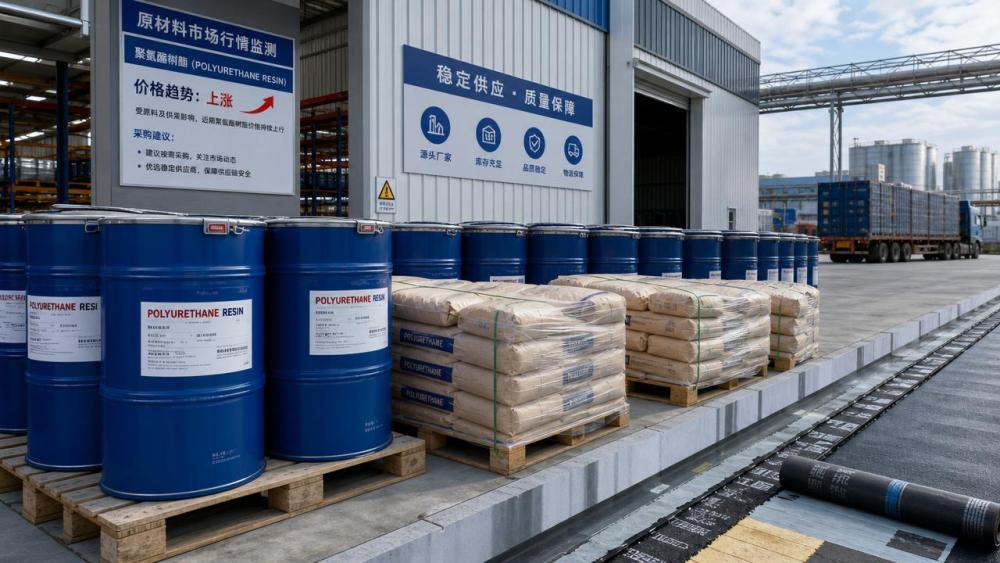
Polyurethane resin pricing is sensitive to petrochemical feedstocks and intermediate chemicals. If upstream markets move sharply, waterproofing polyurethane resin wholesale suppliers may pass increases through quickly, especially when they face replacement-cost risk on their own inventories. A quote increase supported by rising upstream indexes is more credible than one based only on “market pressure” language.
2. Energy and utility costs
Manufacturing resin depends on power, steam, and process stability. Higher energy tariffs or regional utility restrictions can raise production cost significantly. This is especially relevant during periods of industrial peak demand or regulatory controls affecting chemical manufacturing zones.
3. Supply tightness and plant disruptions
Shutdowns, maintenance turnarounds, environmental inspections, and unplanned outages can turn a balanced market into an allocated one. Once allocation begins, suppliers often reduce discount flexibility even before official list prices rise. Finance approvers should treat short quote validity, reduced stock commitment, and partial delivery terms as warning signs.
4. Demand surges tied to construction and maintenance cycles
Seasonal roofing, waterproofing, cold chain expansion, food processing upgrades, and farm facility renovation can create regional demand spikes. In mixed-use industrial markets, procurement competition from construction and infrastructure buyers can tighten material availability for agricultural and light industrial users.
5. Compliance, transport, and packaging changes
Hazard labeling, export controls, transport documentation, drum supply, and warehouse handling rules may appear minor but often increase all-in cost. These factors are easy to overlook because they may be itemized outside the resin unit price.
Decision table: how to judge whether a price increase should be accepted, challenged, or delayed
For finance approvers, the most useful question is not “Has the price gone up?” but “What action is justified now?” The table below provides a practical review standard for waterproofing polyurethane resin wholesale decisions.
Scenario-based checklist: what different buyers should pay extra attention to
Not every buyer faces the same risk when waterproofing polyurethane resin wholesale becomes more expensive. Finance approvers should review the purchasing context, not just the invoice line.
For project-driven buyers
If the material is tied to a live construction, refurbishment, or seasonal facility upgrade, the cost of delay may be greater than the cost increase itself. Confirm project penalty exposure, labor scheduling impact, weather windows, and the likelihood of substitute approval. In this case, approval decisions should compare resin price inflation against total project disruption cost.
For inventory-based industrial users
Processors, warehouse operators, and maintenance teams with recurring demand should focus on stock coverage, monthly consumption variance, and shelf-life constraints. The best response may be a phased buy rather than a one-time bulk purchase, especially if the market is volatile but not structurally short.
For distributors or trading intermediaries
Margin protection is critical. Finance teams should calculate whether downstream customers can absorb higher resale prices, whether contracts permit pass-through, and whether inventory bought at higher cost will compete against lower-cost stock already in the market.
Commonly overlooked risks in waterproofing polyurethane resin wholesale approvals
Many approval mistakes happen not because the market was unpredictable, but because the review missed practical details. The following risk reminders are especially relevant.
- A lower unit quote may hide higher application loss, lower yield, or more rework risk.
- A “same grade” claim may still involve different curing behavior, odor profile, adhesion performance, or storage stability.
- Freight terms may shift responsibility from supplier to buyer, changing the true landed cost.
- Imported or cross-region supply may create currency exposure, customs delay, or compliance review risk.
- Large advance purchases can create write-down risk if project scope changes or demand slows.
- Failing to document the reason for emergency approval reduces future negotiating leverage and audit clarity.
Practical execution steps to control cost without sacrificing supply stability
When waterproofing polyurethane resin wholesale costs move up, finance should not act as a simple blocker or rubber stamp. A stronger role is to set approval conditions that reduce total exposure. The following actions are practical and measurable.
Build a trigger-based approval system
Set internal rules for what level of increase requires benchmark evidence, secondary quotations, technical validation, or executive review. This improves consistency and avoids ad hoc decisions under time pressure.
Separate strategic volume from urgent volume
Approve immediate operational needs first, then review whether the remaining demand should be bought now, staged over time, or split across suppliers. This approach limits exposure to sudden market swings while preserving continuity.
Negotiate on total terms, not only price
If a supplier cannot reduce the waterproofing polyurethane resin wholesale unit price, finance can still seek value through longer payment terms, fixed freight, rebate structures, call-off delivery, consignment stock, or price review clauses tied to feedstock indexes.
Require technical and commercial alignment
Any proposal to change grade, source, or packaging should be reviewed jointly by procurement, operations, technical staff, and finance. Savings that weaken waterproofing performance or increase field failure risk are often false savings.
Keep a documented market view
For recurring purchases, maintain a simple monthly record of quote movement, supplier comments, upstream cost references, and approval outcomes. Over time, this creates a practical pricing history that improves future budgeting and negotiation.
Budget preparation checklist for the next procurement cycle
To prepare for future waterproofing polyurethane resin wholesale volatility, finance approvers should ask teams to gather these items before the next sourcing round:
- Monthly consumption forecast by site, project, or business unit
- Required technical specifications and any approved substitutes
- Current stock, safety stock, and shelf-life position
- Supplier performance history on delivery, quality, and claims response
- Target payment terms and working capital limits
- Project criticality ranking so urgent demand is clearly separated from flexible demand
- Evidence sources for market pricing, including upstream indexes and comparable quotes
Final guidance for approval and supplier discussions
When waterproofing polyurethane resin wholesale costs go up, the best finance response is disciplined review, not automatic resistance or automatic acceptance. Start with the cause of the increase, test whether supply pressure is real, compare landed cost rather than headline price, and match the buying decision to the urgency of actual demand. For businesses across agriculture, forestry, animal husbandry, fishery, processing, storage, and related light industries, this structured approach helps protect margins while avoiding material shortages.
If your team needs to move from price concern to approval action, the most useful next step is to clarify five points with suppliers and internal stakeholders: exact specification, available volume, delivery timing, payment structure, and the basis for the price adjustment. Once those points are documented, finance approvers can judge whether to lock in, phase purchases, test alternatives, or renegotiate terms with greater confidence.
Related News
- 00
0000-00
How Insulation R-Value Affects Chemical Processing Energy Costs and ROI - 00
0000-00
How to Evaluate Solvent Free Waterproofing for Low-VOC Roofing and Concrete Projects - 00
0000-00
ECHA PFAS Curbs Tighten Waterproof Resin Exports - 00
0000-00
How to Evaluate Bituminous Waterproofing Wholesale Options for Project Cost and Performance - 00
0000-00
Polyurethane Waterproofing Resin Wholesale: What Affects Price, MOQ, and Project Suitability?
Dr. Aris Chem
Weekly Insights
Stay ahead with our curated technology reports delivered every Monday.
News Recommendations
The five pillar industries provide end-to-end industry intelligence.
 Author :Dr. Elena BioSupplier Capability Evaluation Audits: Criteria for Reducing Supply Chain RiskSupplier capability evaluation audit criteria help procurement teams verify capacity, quality, compliance, and resilience—reducing supply chain risk before approval.
 Author :Dr. Elena BioHow to Set Agricultural pH Level Specifications for Soil and Irrigation WaterAgricultural specification guide pH level: set practical soil and irrigation water limits, improve nutrient efficiency, protect equipment, and reduce crop risks.
 Author :Lina CleanHow to Qualify a Portable Particle Counter Supplier for GMP Cleanroom MonitoringChoose a portable particle counter supplier with proven GMP calibration traceability, data integrity, responsive service, and lifecycle value for reliable cleanroom monitoring.
 Author :Dr. Aris ChemHow Polycarboxylate Superplasticizers Cut Concrete Water Demand Without Sacrificing StrengthConcrete water reduction ratio polycarboxylate solutions help lower water demand while preserving strength, workability, stability, and production reliability. Explore smarter PCE evaluation.
 Author :Dr. Hideo TanakaSelecting ATEX Pressure Sensors for Zone-Classified Gas and Dust EnvironmentsATEX pressure sensor selection guide for Zone-classified gas and dust environments. Explore Ex markings, temperature limits, protection methods, and certified installation essentials.
 Author :Vibration AnalyzersIP67 vs IP69K Sensor Ratings: Selecting Protection for Middle East Dust and WashdownIP67 vs IP69K sensor rating Middle East: compare dust, immersion and hot washdown protection to select reliable sensors for demanding regional conditions.
 Author :Dr. Elena BioChemical Industry Outlook: Feedstock Costs, Supply Risks, and Demand SignalsChemical industry outlook: assess feedstock costs, supply risks, and demand signals to strengthen sourcing, pricing, inventory, and resilient growth.
 Author :Vibration AnalyzersHow to Select an Edge Computing Sensor Gateway for Low-Latency Industrial MonitoringEdge computing sensor gateway selection guide for low-latency industrial monitoring. Compare compatibility, reliability, security, and integration to improve uptime.
 Author :Dr. Elena BioFood Packaging Policy Updates: What Compliance Teams Must Track in 2026Food packaging policy updates for 2026: build a market-ready compliance system for food contact safety, recycled content, labeling, supplier evidence, and packaging claims.
 Author :Dr. Aris ChemMortar Bond Strength Test: Methods, Failure Modes, and Acceptance CriteriaMortar bond strength test guide: compare methods, interpret failure modes, and set project-specific acceptance criteria for reliable masonry performance.
 Author :Vibration AnalyzersSmart Factory Automation News: Which Investment Signals Matter to Discrete Manufacturers?Smart factory automation news: discover the investment signals that help discrete manufacturers improve quality, flexibility, uptime, and ROI without costly disruption.
 Author :Dr. Elena BioHow to Evaluate Fishery Technology Suppliers in Europe for Fleet Upgrade ProjectsFishery technology supplier Europe guide: evaluate fleet upgrade partners for compatibility, compliance, lifecycle cost, service coverage, data security, and risk-adjusted value.
 Author :Dr. Elena BioSingle-Use Bioreactor Cost: What Drives Pricing and Total Cost of Ownership?Single use bioreactor cost explained: compare purchase price, bag expenses, automation, service, and total cost of ownership for smarter procurement decisions.
 Author :Dr. Elena BioAgricultural Specification Guide: What pH Levels Do Different Crops Need?Agricultural specification guide pH level: discover ideal soil pH ranges for major crops, avoid nutrient lock-up, and improve yield with smarter testing and amendments.
 Author :Dr. Aris ChemHow to Evaluate a Powder Polycarboxylate Ether Factory for Reliable Concrete SupplyEvaluate a powder polycarboxylate ether factory with practical guidance on quality control, concrete compatibility, supply reliability, and total cost performance.
 Author :Dr. Aris ChemConcrete Strength Price: How Mix Grade, Cement Content, and Admixtures Affect CostConcrete strength price explained: compare mix grade, cement content, aggregates, admixtures, and delivery costs to secure reliable performance and better value.
 Author :Dr. Aris ChemSelf-Leveling Flowability Metrics: How to Predict Spread and Placement StabilitySelf-leveling flowability metrics reveal how spread, flow retention, rheology, and segregation resistance shape stable placement—explore a practical evaluation framework.
 Author :Dr. Elena BioHow to Evaluate an Industrial Supplier Directory for Reliable Sourcing DecisionsIndustrial sourcing information helps buyers assess supplier directory quality, verify lead relevance, and make smarter, lower-risk sourcing decisions. Discover practical evaluation steps.
 Author :Lina CleanHow to Evaluate Low Energy Cleanrooms for HVAC Efficiency and Airflow ControlLow energy cleanrooms: learn how to evaluate HVAC efficiency, airflow, pressure cascades, recovery tests, and lifecycle costs for reliable contamination control.
 Author :Dr. Elena BioSupplier Capability Assessment Criteria: A Practical Scorecard for Procurement TeamsSupplier capability assessment criteria: build a practical procurement scorecard to verify quality, capacity, traceability, delivery resilience, and supplier risk controls.
 Author :Lina CleanHEPA Filtration in Europe: Which EN 1822 Requirements Matter for Cleanroom Projects?HEPA filtration Europe guide: understand EN 1822 H13/H14 requirements, MPPS testing, leak scans and cleanroom integrity checks for confident project specifications.
 Author :Dr. Elena BioSupplier Capability Assessment Checklist: 12 Criteria to Reduce Sourcing RiskSupplier capability assessment checklist: explore 12 essential criteria to evaluate quality, capacity, compliance, traceability, and delivery reliability—reduce sourcing risk and build resilient supplier partnerships.
 Author :Lina CleanHow to Set Cleanroom Environmental Alert Limits for Lithography Yield ControlLithography environment control alerts for cleanroom yield: learn to set warning and action limits that detect drift early, reduce false alarms, and protect wafers.
 Author :Dr. Elena BioAgriculture Supply Chain News: What Disruptions Mean for Crop Input BuyersAgriculture supply chain news helps crop input buyers manage fertilizer, seed, pesticide, and logistics disruptions with smarter sourcing strategies and stronger supply resilience.
 Author :Marcus AeroEurope Aviation MRO Market Trends 2026: What Airlines and Suppliers Should WatchAviation MRO market trends 2026 Europe reveal where engine bottlenecks, labor shortages, digital upgrades, and supplier partnerships will reshape airline costs, capacity, and competitive advantage.
 Author :Dr. Elena BioHow to Evaluate Wastewater Treatment Solutions for Compliance, Cost, and Site NeedsSolution evaluation resources for wastewater treatment: learn how to compare compliance, lifecycle cost, and site constraints to choose reliable systems with less risk.
 Author :Dr. Elena BioWhat Procurement Product Evaluation Resources Help Buyers Compare Vendors Faster?Procurement product evaluation resources help buyers compare vendors faster with spec sheets, scorecards, cost models, and compliance checks that reduce risk, delays, and hidden costs.
 Author :Dr. Aris ChemHow Insulation R-Value Affects Chemical Processing Energy Costs and ROIInsulation r-value chemical metrics cost analysis shows how better insulation cuts energy spend, improves process stability, and delivers faster ROI in chemical processing.
 Author :Marcus AeroLightweight Material Innovations in Manufacturing: What Engineers Should WatchLightweight material innovations news manufacturing: explore which composites, alloys, and bio-based polymers are truly production-ready, lower risk, and worth engineers’ attention now.
 Author :Dr. Elena BioCrop Input Buyer Guide: How to Compare Fertilizer, Seed, and Chemical OptionsCrop input buyer guide for smarter fertilizer, seed, and chemical decisions. Compare real cost, field performance, compliance, and supplier reliability to protect farm margins.
 Author :Dr. Elena BioHow to Evaluate Animal Nutrition Purchasing Specifications for Ingredient QualityPurchasing specification resources animal nutrition teams use should define quality, safety, traceability, and receiving standards—learn how to compare ingredient specs and avoid costly sourcing mistakes.
 Author :Dr. Elena BioHow to Evaluate Animal Feed Additives for Livestock Performance and Cost ControlAnimal feed additives: learn how to compare function, inclusion cost, performance impact, and supplier reliability to improve livestock results and control feed spend.
 Author :Marcus AeroHow to Use Airframe Fastener Fatigue Data to Predict Joint Life and Inspection IntervalsAirframe fastener fatigue data explained in a practical guide to predict joint life, assess crack growth, and set safer inspection intervals with more confidence.
 Author :Lina CleanChina Customs Launches Fast-Track Export Clearance for FFU and HEPA FiltersChina Customs launches fast-track export clearance for FFU and HEPA filters, targeting 48-hour processing at key ports. Explore how this pilot boosts compliance confidence and delivery predictability.
 Author :Marcus AeroHow to Evaluate an Aircraft Heat Exchanger Supplier for Aerospace ProgramsAircraft heat exchanger supplier selection can make or break aerospace programs. Learn how to assess compliance, quality systems, engineering depth, lead times, and total cost before award.
 Author :Lina CleanChina-UAE Direct Sea Route Cuts FFU and HEPA Lead Times by 7-10 DaysChina-UAE direct sea route cuts FFU and HEPA lead times by 7-10 days, helping Gulf buyers improve cleanroom supply planning, project timing, and delivery stability. Learn what it means now.
 Author :Dr. Elena BioFood Grade Plastics Compared: How to Evaluate Safety, Heat Resistance, and CostMaterial comparison guide for food grade plastics: compare safety, heat resistance, and cost to choose the best resin for your application.
 Author :Lina CleanChina Imposes Temporary Helium Export Controls, Raising Supply Chain Questions for FFU and HEPA MakersChina helium export controls raise urgent questions for FFU and HEPA makers. Learn how compliance, cleanroom testing, and delivery stability may be affected.
 Author :Dr. Elena BioHow Single-Use Tech Impacts CDMO Efficiency, Cost, and Scale-Up DecisionsImpact of single-use tech on CDMO efficiency, cost, and scale-up decisions—discover key trade-offs, hidden savings, and smarter capacity planning.
 Author :Lina CleanChina's Helium Export Ban Puts FFU and HEPA Testing Under PressureChina’s helium export ban is pressuring FFU and HEPA testing, threatening calibration, certification, and delivery for exporters.