A professional information and consulting platform for agriculture, forestry, animal husbandry, fishery and related light industry sectors;

EU EPPO Targets VAT Fraud in China-EU Textile Trade





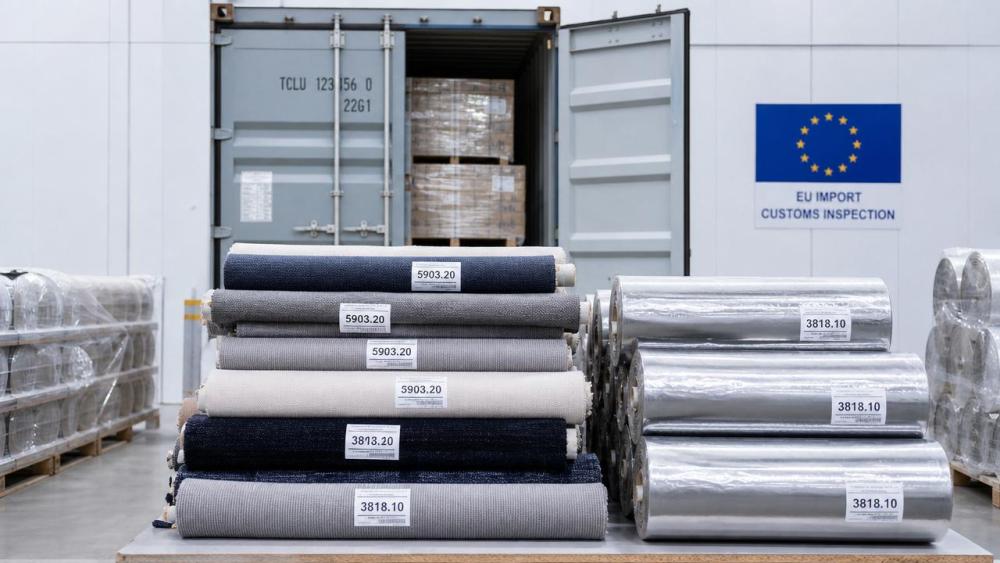
On 10 April 2026, the European Public Prosecutor’s Office (EPPO) launched Operation ‘Podlimit’, uncovering VAT and customs duty evasion exceeding €137 million linked to Chinese textile imports into the EU. The case involved nine Czech companies exploiting the CP42 customs procedure to understate value and misdeclare final destination. This development carries direct implications for importers of textiles, anti-static packaging materials—including consumables supplied by Static Control Systems—and related supply chain service providers operating across EU member states.
Event Overview
On 10 April 2026, the European Public Prosecutor’s Office (EPPO) initiated Operation ‘Podlimit’, resulting in the identification of nine Czech companies engaged in systematic VAT and customs duty fraud concerning textile goods imported from China. According to publicly released information, these entities abused the CP42 customs procedure—designed for temporary admission—to deliberately undervalue shipments and falsely declare their final destination within the EU. The total evaded amount exceeds €137 million. Authorities have confirmed that similar fraudulent patterns are now being observed in imports of anti-static packaging materials, including associated consumables compatible with Static Control Systems equipment.
Industries Affected
Direct Importers and Traders of Textiles and Anti-Static Packaging
These entities face heightened scrutiny during customs clearance, especially when declaring origin, value, or end-use for goods originating in China. Misclassification or incomplete documentation may trigger extended verification, detention, or reassessment of duties and VAT.
Suppliers and Distributors of Static Control Systems-Compatible Consumables
As anti-static packaging materials fall under increased review, suppliers distributing non-branded or third-party consumables compatible with Static Control Systems equipment may encounter stricter origin verification—even if not directly named in the investigation. Customs authorities are now cross-checking Harmonized System (HS) codes commonly used for such items against declared country of origin and transaction value.
Customs Brokerage and Compliance Service Providers
Firms supporting EU-bound shipments from China must now validate declared values against verifiable commercial evidence (e.g., invoices, payment records, production cost breakdowns). Reliance solely on supplier-provided data without independent corroboration increases exposure to liability under EPPO’s expanded enforcement scope.
What Enterprises and Practitioners Should Monitor and Do Now
Track official guidance from EPPO and national customs administrations
EPPO has indicated that Operation ‘Podlimit’ is part of a broader initiative targeting misuse of simplified customs procedures. Stakeholders should monitor updates from the EPPO website and national customs portals—particularly any published lists of high-risk HS codes, countries of origin, or procedural red flags related to CP42 and similar arrangements.
Review current declarations for textile and static-control-related goods
Importers should audit recent entries (especially those cleared under CP42 or other simplified regimes) for consistency between declared value, supporting documentation, and actual commercial terms. Particular attention should be given to shipments where the declared value falls significantly below market benchmarks or where the consignee’s role appears inconsistent with end-use claims.
Verify origin and traceability documentation for anti-static packaging materials
Given the extension of scrutiny to this category, enterprises supplying or importing anti-static packaging—including liners, bags, and foam—should ensure full traceability from raw material sourcing through final assembly. Declarations must reflect accurate country of origin, even where components are sourced globally but final processing occurs outside China.
Prepare internal compliance protocols ahead of potential audits
Companies should document internal controls for valuation determination, including how transfer pricing, freight costs, and royalties are allocated in multi-tiered supply chains. Having these records readily available supports swift response to customs inquiries and reduces risk of retroactive adjustments.
Editorial Perspective / Industry Observation
Observably, this case signals a shift toward coordinated, intelligence-led enforcement targeting procedural loopholes—not just isolated fraud incidents. Analysis shows that EPPO’s focus on CP42 abuse reflects growing concern over systemic vulnerabilities in simplified customs regimes, particularly for high-volume, low-margin goods like textiles and industrial packaging. From an industry perspective, this is less a one-off enforcement action and more a warning indicator: customs authorities are now prioritizing data triangulation (e.g., matching declared value with bank transfers, shipping manifests, and production records) over document-based verification alone. Current developments are better understood as an early-stage escalation in risk assessment methodology—not yet a formal policy change, but clearly shaping future audit criteria and declaration expectations.
Conclusion: This case underscores that compliance in EU customs processes is increasingly dependent on demonstrable data integrity—not just procedural adherence. For stakeholders handling Chinese-origin textiles or anti-static packaging, the priority is not reactive correction, but proactive alignment of documentation, valuation logic, and origin claims with verifiable commercial reality. It is more appropriate to interpret this development as an emerging enforcement pattern than as a finalized regulatory shift—warranting monitoring, not alarm, but requiring methodical preparation.
Source: European Public Prosecutor’s Office (EPPO) press release dated 10 April 2026; official statements referencing Operation ‘Podlimit’. Note: Further details regarding implicated HS codes, specific Static Control Systems-compatible product lines, or national-level implementation timelines remain pending official publication and are subject to ongoing observation.
Related News
- 00
0000-00
Temperature Sensor Response Time in Food Processing: How Fast Is Fast Enough? - 00
0000-00
Europe's Aerospace Supply Chain: Key Bottlenecks and Sourcing Risks - 00
0000-00
TE Connectivity Launches High-Precision MEMS Pressure Sensor Series - 00
0000-00
Choosing a Structured Product Information Supplier: Data Quality and Update Frequency - 00
0000-00
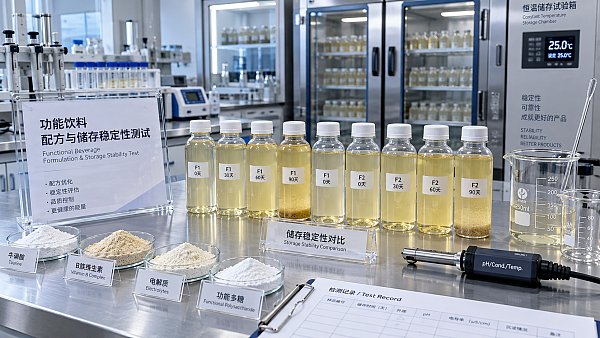
Selecting Functional Ingredients for Beverages: Efficacy and Stability
Industry Global
Weekly Insights
Stay ahead with our curated technology reports delivered every Monday.
News Recommendations
The five pillar industries provide end-to-end industry intelligence.
 Author :Vibration AnalyzersTemperature Sensor Response Time in Food Processing: How Fast Is Fast Enough?Temperature sensor response time in food processing: learn how to compare probes, reduce detection delays, and validate installed performance. Find out how fast is fast enough.
 Author :Marcus AeroEurope's Aerospace Supply Chain: Key Bottlenecks and Sourcing RisksExplore the aerospace supply chain Europe relies on. Uncover material bottlenecks, approval delays and supplier risks—and learn how to strengthen sourcing and protect deliveries.
 Author :Dr. Hideo TanakaTE Connectivity Launches High-Precision MEMS Pressure Sensor SeriesDiscover TE Connectivity’s high-precision MEMS pressure sensors, combining low power and long-term stability for demanding aerospace, industrial automation and medical applications.
 Author :Dr. Elena BioChoosing a Structured Product Information Supplier: Data Quality and Update FrequencyChoose a structured product information supplier with confidence. Learn how to assess data quality, validation, and update frequency to reduce sourcing risks and make smarter buying decisions.
 Author :Dr. Elena BioSelecting Functional Ingredients for Beverages: Efficacy and StabilityOptimize ingredient selection for functional ingredients in beverages. Discover how to verify efficacy, protect shelf-life stability, and deliver consistent doses at a competitive cost.
 Author :Vibration AnalyzersDisplacement Sensor Manufacturers in Latin America: Lead Times and Local SupportNeed a displacement sensor manufacturer Latin America can rely on? Compare lead times, local stock, and technical support to reduce downtime and choose the right supplier.
 Author :Dr. Aris ChemWhich Certifications Matter for Adhesives Used in Export Fishing Gear?What fishing gear certifications matter for export markets? Explore adhesive compliance, REACH, food-contact evidence, and durability tests to choose suppliers and ship with confidence.
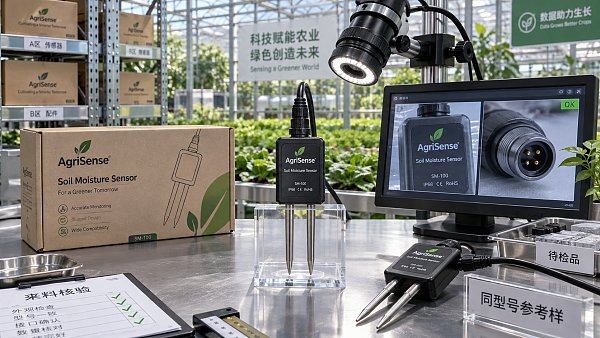
 Author :Vibration AnalyzersHow Can OEM Verification Help Buyers Avoid Counterfeit Farm Sensors?How can I avoid counterfeit farm supplies? Discover how OEM verification, supplier checks, and sensor inspections help reduce buying risks and protect farm operations.
 Author :Lina CleanWhich Modular Livestock Housing Systems Are Easiest to Scale?Which animal husbandry systems are easiest to scale? Compare modular barns, poultry houses, and pig units to find practical expansion options and avoid costly bottlenecks.
 Author :Dr. Hideo TanakaHow Often Should Irrigation Pressure Sensors Be Serviced?How often should commercial irrigation systems be serviced? Discover pressure sensor maintenance intervals, warning signs, and accuracy checks to help cut downtime and reduce water waste.
 Author :Dr. Elena BioChoosing Livestock Procurement Planning Support to Reduce Feed Supply RiskChoose procurement planning support for livestock operations to reduce feed supply risk. Compare forecasting, inventory visibility, and supplier reliability for smarter purchasing decisions.
 Author :Dr. Elena BioAquaculture Equipment: What Each System Does in a Modern Fish FarmAquaculture equipment information for modern fish farms: explore water management, aeration, filtration, feeding, monitoring, fish handling, and backup systems.
 Author :Lina CleanSelecting 1200 x 600 Ceiling Grid Systems for Cleanroom Load and Access Needs1200x600 ceiling grid selection guide for cleanrooms: assess loads, independent equipment support, panel access, sealing, and durable materials for reliable performance.
 Author :Dr. Elena BioSeed Processing Equipment Guide: Selecting Cleaners, Graders, and Treaters by CropAgricultural equipment guide for seed processing: compare crop-specific cleaners, graders, and treaters to improve purity, protect germination, and select a scalable processing line.
 Author :Dr. Elena BioWhat Counts as Forestry Products? A Guide to Timber, Pulp, Biomass, and NTFPsForestry products explained: explore timber, pulp, paper, biomass, and NTFPs, plus sourcing, certification, and trade insights for smarter decisions.
 Author :Dr. Elena BioWhen Is an Industrial Product Subject to FDA Compliance? A Documentation ChecklistIndustrial product knowledge for FDA compliance: learn when contact, intended use, and exposure trigger requirements, plus a practical documentation checklist for confident sourcing.
 Author :Dr. Elena BioSemiconductor Sourcing Strategy: How to Reduce Allocation Risk and Lead-Time ExposureSemiconductor sourcing strategy insights to reduce allocation risk, control lead-time exposure, qualify alternates, and protect production with smarter supply planning.
 Author :Dr. Elena BioDistributor Product Research in Europe: Finding Profitable Market GapsDistributor product research Europe: uncover profitable market gaps with practical insights on demand, compliance, local supply, and scalable routes to market.
 Author :Lina CleanHow to Select Biopharma Cleanroom Modules for GMP-Ready Facility ExpansionBiopharma cleanroom modules: learn how to select scalable, GMP-ready systems that support contamination control, validation, flexible expansion, and reliable delivery.
 Author :Dr. Elena BioFood Ingredient OEM Cooperation: A Due Diligence Checklist for Brand BuyersOEM cooperation guide for food ingredients: use this due diligence checklist to assess quality systems, compliance, capacity, costs, and supplier risk before choosing an OEM partner.
 Author :Dr. Elena BioOEM Cooperation Pricing: What Should Buyers Confirm Before Requesting a Quote?OEM cooperation guide pricing: learn what buyers should confirm before requesting a quote, from specifications and MOQ to quality, lead times, and hidden costs.
 Author :Dr. Elena BioHow to Select Farm Equipment Solutions for Small and Mid-Sized OperationsFarm equipment solutions for small and mid-sized operations: compare capacity, total cost, technology, and supplier support to choose reliable equipment that protects productivity and budget.
 Author :Dr. Elena BioAnimal Husbandry Price Trends: What Feed Costs and Herd Cycles Mean for 2026 MarginsAnimal husbandry price trends for 2026: explore how feed costs, herd cycles, disease, trade, and operational discipline could shape livestock margins and smarter business decisions.
 Author :Dr. Elena BioHydraulic Valve Price by Pressure Rating: What Buyers Should Compare Before OrderingHydraulic valve pressure rating price guide: compare continuous pressure, surge tolerance, flow capacity, seals, and documentation to buy the right valve with confidence.
 Author :Marcus AeroAerospace Material Hardness Comparison: Selecting Alloys for Wear and Fatigue LoadsMaterial hardness comparison aerospace guide: compare alloys for wear and fatigue loads, balancing hardness, toughness, coatings, corrosion resistance, and manufacturing risk.
 Author :Dr. Elena BioLivestock Market Outlook: Supply, Feed Costs, and Pricing Risks for BuyersLivestock market outlook for buyers: assess supply availability, feed-cost pressure, and pricing risks to secure reliable volumes and make smarter purchasing decisions.
 Author :Dr. Aris ChemChemical Sourcing Specification Preparation: What Buyers Must Define Before RFQsSpecification preparation guide for chemical sourcing: define identity, quality, packaging, shelf-life, documentation, and acceptance rules before RFQs for comparable quotes and fewer supply risks.
 Author :Dr. Elena BioCustomization Service Costs: What Information Should Procurement Teams Request?Customization service information cost explained: learn what procurement teams should request to compare quotes, control hidden expenses, and negotiate customized supply projects with confidence.
 Author :Dr. Elena BioAgricultural Trade Market Report: Key Supply, Price, and Policy Signals to TrackAgricultural trade market report: track supply, prices, trade flows, policy shifts, and technology signals to reduce risk, assess suppliers, and uncover new opportunities.
 Author :Lina CleanHow to Qualify a Steel Raised Access Floor Factory for Load and ESD NeedsSteel raised access floor factory qualification guide: verify load ratings, deflection limits, ESD grounding, material traceability, and delivery reliability for critical facilities.
 Author :Lina CleanHow PFAS Bans Are Reshaping Chemical Qualification and Compliance in Semiconductor FabsImpact of PFAS ban on fab chemicals regulations: learn how semiconductor fabs can strengthen chemical qualification, supplier traceability, change control, and waste compliance.
 Author :Dr. Elena BioLabeling Compliance Requirements: A Reference Guide for GMP Fill-Finish OperationsCompliance reference guide labeling requirements for GMP fill-finish operations—strengthen label control, traceability, reconciliation, and deviation prevention.
 Author :Lina CleanNovec Cleanroom Fire Suppression: How to Assess Residue, Downtime, and Room IntegrityNovec cleanroom fire suppression: assess residue, downtime, enclosure integrity, airflow control, and recovery planning to protect critical operations.
 Author :Dr. Elena BioSupplier Capability Evaluation Audits: Criteria for Reducing Supply Chain RiskSupplier capability evaluation audit criteria help procurement teams verify capacity, quality, compliance, and resilience—reducing supply chain risk before approval.
 Author :Dr. Elena BioHow to Set Agricultural pH Level Specifications for Soil and Irrigation WaterAgricultural specification guide pH level: set practical soil and irrigation water limits, improve nutrient efficiency, protect equipment, and reduce crop risks.
 Author :Lina CleanHow to Qualify a Portable Particle Counter Supplier for GMP Cleanroom MonitoringChoose a portable particle counter supplier with proven GMP calibration traceability, data integrity, responsive service, and lifecycle value for reliable cleanroom monitoring.
 Author :Dr. Aris ChemHow Polycarboxylate Superplasticizers Cut Concrete Water Demand Without Sacrificing StrengthConcrete water reduction ratio polycarboxylate solutions help lower water demand while preserving strength, workability, stability, and production reliability. Explore smarter PCE evaluation.
 Author :Dr. Hideo TanakaSelecting ATEX Pressure Sensors for Zone-Classified Gas and Dust EnvironmentsATEX pressure sensor selection guide for Zone-classified gas and dust environments. Explore Ex markings, temperature limits, protection methods, and certified installation essentials.
 Author :Vibration AnalyzersIP67 vs IP69K Sensor Ratings: Selecting Protection for Middle East Dust and WashdownIP67 vs IP69K sensor rating Middle East: compare dust, immersion and hot washdown protection to select reliable sensors for demanding regional conditions.
 Author :Dr. Elena BioChemical Industry Outlook: Feedstock Costs, Supply Risks, and Demand SignalsChemical industry outlook: assess feedstock costs, supply risks, and demand signals to strengthen sourcing, pricing, inventory, and resilient growth.