A professional information and consulting platform for agriculture, forestry, animal husbandry, fishery and related light industry sectors;

How air shower nozzle velocity data flags cleanroom risk





For quality control and safety teams, air shower nozzle velocity data is more than a maintenance metric. It is an early warning signal for contamination risk.
In food processing, seed technology, veterinary products, fisheries, and light industries, airflow weakness can move dust, microbes, and residues into controlled zones.
By tracking air shower nozzle velocity data, operations can identify drift, support compliance, and act before quality, safety, or audit outcomes are affected.
How air shower nozzle velocity data is becoming a cleanroom risk signal
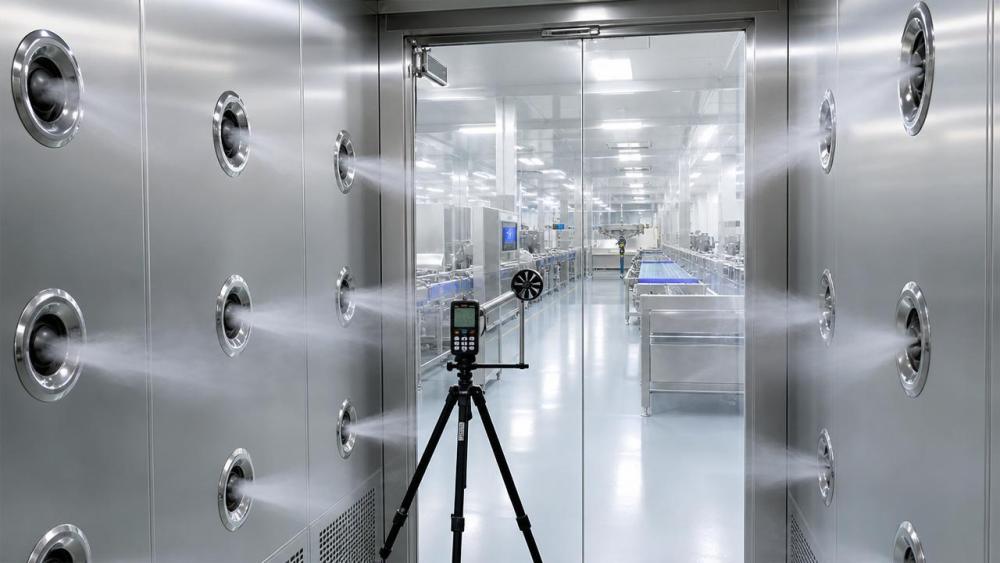
Cleanroom control is changing from occasional inspection to continuous evidence. Airflow performance is now part of that shift.
Air shower nozzle velocity data helps reveal whether people, packaging, tools, and carts receive enough particle removal before entry.
A single weak nozzle may seem minor. However, uneven velocity can create blind spots around clothing folds, gloves, footwear, and container surfaces.
For agricultural biotechnology, dairy processing, animal health products, and aquatic product handling, these blind spots can become costly contamination pathways.
The trend is clear. Air shower nozzle velocity data is moving from service records into risk dashboards, audit files, and preventive action plans.
Current background: tighter hygiene expectations meet more complex production flows
Controlled environments are no longer limited to pharmaceuticals and electronics. More food, seed, feed, and veterinary operations now use cleaner production zones.
This expansion increases attention on entry control. Air showers are often the last barrier before sensitive rooms.
At the same time, facilities handle more product varieties, faster changeovers, and wider packaging formats. Each factor increases particle movement risk.
Air shower nozzle velocity data provides a practical way to see whether entry protection still matches real operating conditions.
When data shows falling velocity, blocked filters, fan fatigue, leakage, poor balancing, or nozzle damage may already be affecting performance.
When data shows uneven distribution, the issue may be worse. It suggests some surfaces are cleaned while others remain exposed.
Trend drivers behind the rising value of velocity monitoring
Several forces are making air shower nozzle velocity data more important across integrated agriculture and light industrial supply chains.
The strongest driver is accountability. Recorded air shower nozzle velocity data makes hidden airflow decline visible and reviewable.
This visibility changes decisions. Maintenance is no longer based only on calendar intervals or operator complaints.
What declining nozzle velocity can indicate before contamination appears
Cleanroom failures often appear after a chain of small changes. Air shower nozzle velocity data can expose early links in that chain.
- Gradual velocity loss may indicate filter loading or fan performance decline.
- Sudden drops may indicate mechanical failure, electrical faults, or blocked nozzles.
- Side-to-side imbalance may indicate leakage, duct restriction, or nozzle misalignment.
- Unstable readings may indicate control issues, door leakage, or inconsistent operating cycles.
These patterns are valuable because they appear before visible dirt, positive microbial results, or abnormal particle counts.
Air shower nozzle velocity data also supports root cause analysis after deviations. It can confirm whether entry control weakened during the affected period.
In multi-shift operations, trend data reduces uncertainty. It shows whether performance changed during cleaning, changeover, maintenance, or peak traffic.
Impacts across production, compliance, trade, and supply chain confidence
The impact of air shower nozzle velocity data extends beyond equipment maintenance. It touches product release, customer confidence, and business continuity.
In food processing, weak velocity may increase the chance of allergen dust, flour particles, or environmental residues entering hygienic rooms.
In seed and crop science, contamination control protects purity, germination reliability, and traceable research or production batches.
In veterinary and animal nutrition products, clean entry practices help protect formulation integrity and reduce cross-contact risk.
In fishery processing, controlled entry can support hygiene around chilled rooms, ready-to-eat lines, and high-moisture handling areas.
For supply chains, documented air shower nozzle velocity data can strengthen confidence during customer reviews, certification checks, and export-related inspections.
Business areas most affected by airflow drift
- Incoming material staging, where cartons and containers may carry particles.
- Personnel entry, where clothing surfaces need consistent high-velocity cleaning.
- Packaging entry, where film, bags, trays, and labels can transport dust.
- Tool transfer, where handles and cases may bypass routine surface cleaning.
- Maintenance access, where temporary activities can disturb normal cleanliness controls.
These areas often see high movement. That makes air shower nozzle velocity data useful for prioritizing risk reviews.
Key indicators to watch in nozzle velocity records
Useful records go beyond one pass-or-fail number. They show direction, consistency, and relationship to actual operations.
- Baseline velocity: the normal range after installation, balancing, or major maintenance.
- Lowest nozzle reading: the weakest point that may decide real decontamination performance.
- Velocity spread: the difference between the strongest and weakest nozzle positions.
- Trend slope: how quickly velocity changes between inspection periods.
- Event linkage: changes after filter replacement, repairs, production surges, or cleaning.
Air shower nozzle velocity data should be reviewed with particle monitoring, sanitation results, maintenance logs, and room pressure records.
This combined view prevents overreaction to one number. It also prevents underreaction when several weak signals align.
A practical threshold system can classify readings as normal, watch, action, or stop-use, depending on process sensitivity.
How to interpret air shower nozzle velocity data without missing risk
Interpretation should start with process risk. A seed lab, seafood room, and dry powder line may need different action limits.
Next, compare readings with the original qualified condition. Absolute values matter, but deviation from the known baseline matters too.
Third, examine distribution. Average velocity can look acceptable while several nozzles underperform.
Fourth, review use intensity. A high-traffic entrance may need tighter monitoring than a low-use technical access point.
Consistent method is essential. Measurements should use defined positions, calibrated instruments, and comparable operating conditions.
Without consistent method, air shower nozzle velocity data may create confusion instead of control.
Operational priorities as velocity monitoring becomes routine
As monitoring becomes more common, the focus should shift from collecting data to using it well.
- Define normal velocity ranges for each air shower and process area.
- Record individual nozzle readings, not only average values.
- Set alert levels based on contamination risk and room sensitivity.
- Link readings with filter pressure, door operation, and cleaning schedules.
- Review trends after layout changes, production expansion, or new materials.
- Train entry users to report weak airflow, unusual noise, or cycle changes.
Air shower nozzle velocity data becomes more powerful when it is part of a documented contamination control strategy.
It should not be isolated in maintenance files. It should inform deviation review, hygiene verification, and capacity planning.
Forward view: from reactive checks to predictive cleanroom control
The next stage is predictive use. Facilities can compare air shower nozzle velocity data across seasons, shifts, and product campaigns.
Seasonal dust, humidity, pollen, feed ingredients, or packaging debris may influence filter loading and airflow stability.
Historical records can show when velocity decline usually begins. Maintenance can then be planned before high-risk production periods.
Digital logs also help compare similar facilities. This supports benchmarking across processing plants, laboratories, farms, and cold-chain sites.
Over time, air shower nozzle velocity data may support smarter alerts, remote diagnostics, and more precise filter replacement decisions.
The goal is not more data for its own sake. The goal is earlier warning and lower contamination uncertainty.
Action steps for stronger contamination prevention
Start with a baseline survey. Measure every nozzle under stable operating conditions and document the qualified velocity range.
Then build a trend record. Review air shower nozzle velocity data at intervals matched to traffic, product sensitivity, and audit requirements.
Create response rules before problems occur. Define who reviews deviations, who authorizes continued use, and when requalification is required.
Finally, connect airflow findings with broader cleanroom evidence. Particle counts, sanitation checks, and maintenance history should support one decision picture.
For modern agriculture-linked and light industrial operations, air shower nozzle velocity data is a practical signal worth watching closely.
Used consistently, it helps detect hidden drift, protect controlled areas, and turn cleanroom risk management into a measurable routine.
Related News
- 00
0000-00
How PFAS Bans Are Reshaping Chemical Qualification and Compliance in Semiconductor Fabs - 00
0000-00
Novec Cleanroom Fire Suppression: How to Assess Residue, Downtime, and Room Integrity - 00
0000-00
How to Qualify a Portable Particle Counter Supplier for GMP Cleanroom Monitoring - 00
0000-00
How to Set Cleanroom Environmental Alert Limits for Lithography Yield Control - 00
0000-00
What ISO 5 Cleanroom Garments Do You Need for Controlled Environments?
Lina Clean
Weekly Insights
Stay ahead with our curated technology reports delivered every Monday.
News Recommendations
The five pillar industries provide end-to-end industry intelligence.
 Author :Vibration AnalyzersTemperature Sensor Response Time in Food Processing: How Fast Is Fast Enough?Temperature sensor response time in food processing: learn how to compare probes, reduce detection delays, and validate installed performance. Find out how fast is fast enough.
 Author :Marcus AeroEurope's Aerospace Supply Chain: Key Bottlenecks and Sourcing RisksExplore the aerospace supply chain Europe relies on. Uncover material bottlenecks, approval delays and supplier risks—and learn how to strengthen sourcing and protect deliveries.
 Author :Dr. Hideo TanakaTE Connectivity Launches High-Precision MEMS Pressure Sensor SeriesDiscover TE Connectivity’s high-precision MEMS pressure sensors, combining low power and long-term stability for demanding aerospace, industrial automation and medical applications.
 Author :Dr. Elena BioChoosing a Structured Product Information Supplier: Data Quality and Update FrequencyChoose a structured product information supplier with confidence. Learn how to assess data quality, validation, and update frequency to reduce sourcing risks and make smarter buying decisions.
 Author :Dr. Elena BioSelecting Functional Ingredients for Beverages: Efficacy and StabilityOptimize ingredient selection for functional ingredients in beverages. Discover how to verify efficacy, protect shelf-life stability, and deliver consistent doses at a competitive cost.
 Author :Vibration AnalyzersDisplacement Sensor Manufacturers in Latin America: Lead Times and Local SupportNeed a displacement sensor manufacturer Latin America can rely on? Compare lead times, local stock, and technical support to reduce downtime and choose the right supplier.
 Author :Dr. Aris ChemWhich Certifications Matter for Adhesives Used in Export Fishing Gear?What fishing gear certifications matter for export markets? Explore adhesive compliance, REACH, food-contact evidence, and durability tests to choose suppliers and ship with confidence.
 Author :Vibration AnalyzersHow Can OEM Verification Help Buyers Avoid Counterfeit Farm Sensors?How can I avoid counterfeit farm supplies? Discover how OEM verification, supplier checks, and sensor inspections help reduce buying risks and protect farm operations.
 Author :Lina CleanWhich Modular Livestock Housing Systems Are Easiest to Scale?Which animal husbandry systems are easiest to scale? Compare modular barns, poultry houses, and pig units to find practical expansion options and avoid costly bottlenecks.
 Author :Dr. Hideo TanakaHow Often Should Irrigation Pressure Sensors Be Serviced?How often should commercial irrigation systems be serviced? Discover pressure sensor maintenance intervals, warning signs, and accuracy checks to help cut downtime and reduce water waste.
 Author :Dr. Elena BioChoosing Livestock Procurement Planning Support to Reduce Feed Supply RiskChoose procurement planning support for livestock operations to reduce feed supply risk. Compare forecasting, inventory visibility, and supplier reliability for smarter purchasing decisions.
 Author :Dr. Elena BioAquaculture Equipment: What Each System Does in a Modern Fish FarmAquaculture equipment information for modern fish farms: explore water management, aeration, filtration, feeding, monitoring, fish handling, and backup systems.
 Author :Lina CleanSelecting 1200 x 600 Ceiling Grid Systems for Cleanroom Load and Access Needs1200x600 ceiling grid selection guide for cleanrooms: assess loads, independent equipment support, panel access, sealing, and durable materials for reliable performance.
 Author :Dr. Elena BioSeed Processing Equipment Guide: Selecting Cleaners, Graders, and Treaters by CropAgricultural equipment guide for seed processing: compare crop-specific cleaners, graders, and treaters to improve purity, protect germination, and select a scalable processing line.
 Author :Dr. Elena BioWhat Counts as Forestry Products? A Guide to Timber, Pulp, Biomass, and NTFPsForestry products explained: explore timber, pulp, paper, biomass, and NTFPs, plus sourcing, certification, and trade insights for smarter decisions.
 Author :Dr. Elena BioWhen Is an Industrial Product Subject to FDA Compliance? A Documentation ChecklistIndustrial product knowledge for FDA compliance: learn when contact, intended use, and exposure trigger requirements, plus a practical documentation checklist for confident sourcing.
 Author :Dr. Elena BioSemiconductor Sourcing Strategy: How to Reduce Allocation Risk and Lead-Time ExposureSemiconductor sourcing strategy insights to reduce allocation risk, control lead-time exposure, qualify alternates, and protect production with smarter supply planning.
 Author :Dr. Elena BioDistributor Product Research in Europe: Finding Profitable Market GapsDistributor product research Europe: uncover profitable market gaps with practical insights on demand, compliance, local supply, and scalable routes to market.
 Author :Lina CleanHow to Select Biopharma Cleanroom Modules for GMP-Ready Facility ExpansionBiopharma cleanroom modules: learn how to select scalable, GMP-ready systems that support contamination control, validation, flexible expansion, and reliable delivery.
 Author :Dr. Elena BioFood Ingredient OEM Cooperation: A Due Diligence Checklist for Brand BuyersOEM cooperation guide for food ingredients: use this due diligence checklist to assess quality systems, compliance, capacity, costs, and supplier risk before choosing an OEM partner.
 Author :Dr. Elena BioOEM Cooperation Pricing: What Should Buyers Confirm Before Requesting a Quote?OEM cooperation guide pricing: learn what buyers should confirm before requesting a quote, from specifications and MOQ to quality, lead times, and hidden costs.
 Author :Dr. Elena BioHow to Select Farm Equipment Solutions for Small and Mid-Sized OperationsFarm equipment solutions for small and mid-sized operations: compare capacity, total cost, technology, and supplier support to choose reliable equipment that protects productivity and budget.
 Author :Dr. Elena BioAnimal Husbandry Price Trends: What Feed Costs and Herd Cycles Mean for 2026 MarginsAnimal husbandry price trends for 2026: explore how feed costs, herd cycles, disease, trade, and operational discipline could shape livestock margins and smarter business decisions.
 Author :Dr. Elena BioHydraulic Valve Price by Pressure Rating: What Buyers Should Compare Before OrderingHydraulic valve pressure rating price guide: compare continuous pressure, surge tolerance, flow capacity, seals, and documentation to buy the right valve with confidence.
 Author :Marcus AeroAerospace Material Hardness Comparison: Selecting Alloys for Wear and Fatigue LoadsMaterial hardness comparison aerospace guide: compare alloys for wear and fatigue loads, balancing hardness, toughness, coatings, corrosion resistance, and manufacturing risk.
 Author :Dr. Elena BioLivestock Market Outlook: Supply, Feed Costs, and Pricing Risks for BuyersLivestock market outlook for buyers: assess supply availability, feed-cost pressure, and pricing risks to secure reliable volumes and make smarter purchasing decisions.
 Author :Dr. Aris ChemChemical Sourcing Specification Preparation: What Buyers Must Define Before RFQsSpecification preparation guide for chemical sourcing: define identity, quality, packaging, shelf-life, documentation, and acceptance rules before RFQs for comparable quotes and fewer supply risks.
 Author :Dr. Elena BioCustomization Service Costs: What Information Should Procurement Teams Request?Customization service information cost explained: learn what procurement teams should request to compare quotes, control hidden expenses, and negotiate customized supply projects with confidence.
 Author :Dr. Elena BioAgricultural Trade Market Report: Key Supply, Price, and Policy Signals to TrackAgricultural trade market report: track supply, prices, trade flows, policy shifts, and technology signals to reduce risk, assess suppliers, and uncover new opportunities.
 Author :Lina CleanHow to Qualify a Steel Raised Access Floor Factory for Load and ESD NeedsSteel raised access floor factory qualification guide: verify load ratings, deflection limits, ESD grounding, material traceability, and delivery reliability for critical facilities.
 Author :Lina CleanHow PFAS Bans Are Reshaping Chemical Qualification and Compliance in Semiconductor FabsImpact of PFAS ban on fab chemicals regulations: learn how semiconductor fabs can strengthen chemical qualification, supplier traceability, change control, and waste compliance.
 Author :Dr. Elena BioLabeling Compliance Requirements: A Reference Guide for GMP Fill-Finish OperationsCompliance reference guide labeling requirements for GMP fill-finish operations—strengthen label control, traceability, reconciliation, and deviation prevention.
 Author :Lina CleanNovec Cleanroom Fire Suppression: How to Assess Residue, Downtime, and Room IntegrityNovec cleanroom fire suppression: assess residue, downtime, enclosure integrity, airflow control, and recovery planning to protect critical operations.
 Author :Dr. Elena BioSupplier Capability Evaluation Audits: Criteria for Reducing Supply Chain RiskSupplier capability evaluation audit criteria help procurement teams verify capacity, quality, compliance, and resilience—reducing supply chain risk before approval.
 Author :Dr. Elena BioHow to Set Agricultural pH Level Specifications for Soil and Irrigation WaterAgricultural specification guide pH level: set practical soil and irrigation water limits, improve nutrient efficiency, protect equipment, and reduce crop risks.
 Author :Lina CleanHow to Qualify a Portable Particle Counter Supplier for GMP Cleanroom MonitoringChoose a portable particle counter supplier with proven GMP calibration traceability, data integrity, responsive service, and lifecycle value for reliable cleanroom monitoring.
 Author :Dr. Aris ChemHow Polycarboxylate Superplasticizers Cut Concrete Water Demand Without Sacrificing StrengthConcrete water reduction ratio polycarboxylate solutions help lower water demand while preserving strength, workability, stability, and production reliability. Explore smarter PCE evaluation.
 Author :Dr. Hideo TanakaSelecting ATEX Pressure Sensors for Zone-Classified Gas and Dust EnvironmentsATEX pressure sensor selection guide for Zone-classified gas and dust environments. Explore Ex markings, temperature limits, protection methods, and certified installation essentials.
 Author :Vibration AnalyzersIP67 vs IP69K Sensor Ratings: Selecting Protection for Middle East Dust and WashdownIP67 vs IP69K sensor rating Middle East: compare dust, immersion and hot washdown protection to select reliable sensors for demanding regional conditions.
 Author :Dr. Elena BioChemical Industry Outlook: Feedstock Costs, Supply Risks, and Demand SignalsChemical industry outlook: assess feedstock costs, supply risks, and demand signals to strengthen sourcing, pricing, inventory, and resilient growth.