A professional information and consulting platform for agriculture, forestry, animal husbandry, fishery and related light industry sectors;

How tight should titanium alloy machining tolerances be





For technical evaluators, defining titanium alloy machining tolerances is a balance between performance, manufacturability, and cost. In industries where precision directly affects fit, durability, and downstream processing, understanding how tight titanium alloy machining tolerances should be helps reduce risk and improve sourcing decisions. This article outlines the key factors that influence tolerance selection and what to assess before setting machining requirements.
What do titanium alloy machining tolerances really need to control?
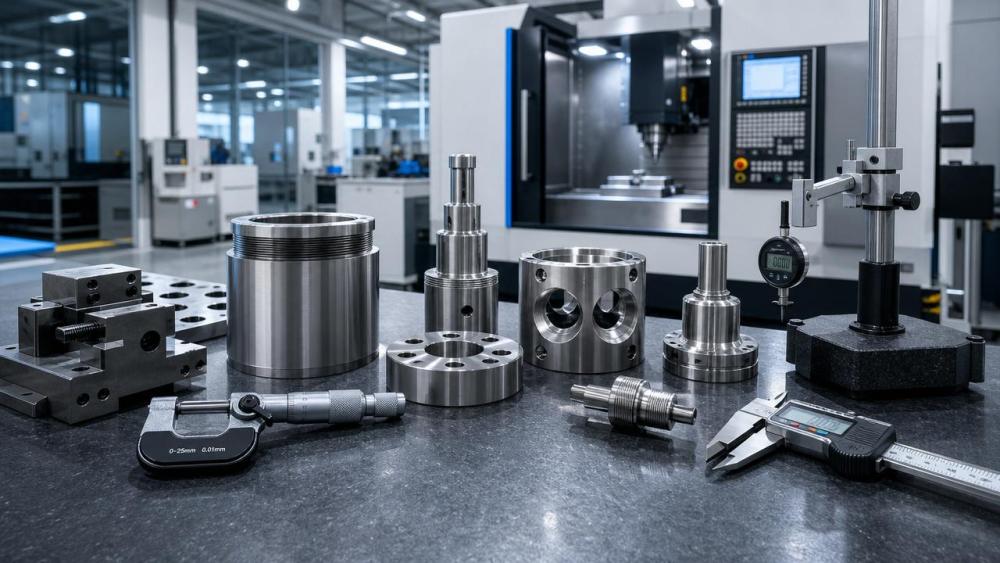
For technical evaluators, titanium alloy machining tolerances are not just dimensional numbers on a drawing. They define whether parts will assemble correctly, maintain seal integrity, resist vibration, and support later coating, welding, or inspection steps.
In agriculture, forestry, fishery, and related light industries, titanium alloy parts are usually selected where corrosion resistance, weight reduction, and service life matter more than low initial price. Typical examples include pump shafts, valve components, marine fasteners, sensor housings, precision sleeves, and parts exposed to fertilizers, saltwater, or cleaning chemicals.
That means the question is rarely whether the tightest tolerance is possible. The better question is whether the tolerance is functionally justified. If the tolerance exceeds process capability or adds unnecessary inspection burden, total procurement risk increases instead of falling.
- Functional fit: mating bores, shafts, threads, and sealing surfaces often require tighter control than cosmetic or clearance-only features.
- Process sensitivity: titanium alloys generate heat, work harden locally, and can deflect under cutting force, which affects repeatability.
- Inspection practicality: a dimension that is expensive to verify may slow delivery or introduce supplier disputes if measurement methods are unclear.
- Lifecycle economics: tighter titanium alloy machining tolerances can lower assembly issues, but they also raise machining time, scrap risk, and tool consumption.
A useful rule for evaluators
If a tolerance does not clearly affect fit, load path, leakage, alignment, vibration, wear, or a regulated downstream operation, it may not need to be extremely tight. Drawings should separate critical features from general dimensions instead of applying one strict standard across the entire part.
How tight should titanium alloy machining tolerances be by feature type?
The right tolerance range depends on geometry, material grade, part size, machining route, and inspection method. The table below gives practical evaluation ranges that technical teams can use as an initial screening reference for titanium alloy machining tolerances.
These values are not universal promises. They are starting points for discussion. A short, rigid shaft made from a stable bar stock may hold tighter values than a thin-walled, long titanium tube with interrupted cuts. Evaluators should always match tolerance requests to actual manufacturing capability.
When very tight tolerances are justified
- The feature controls sealing under pressure or vacuum.
- The part interfaces with bearings, precision bushings, or calibrated sensors.
- The assembly has no field adjustment and misfit creates costly downtime.
- The component is used in corrosive, wet, or abrasive agricultural and marine-adjacent service where misalignment accelerates wear.
When moderate tolerances are the better choice
If the feature only locates a cover, guides a hose, carries a non-critical fastener, or is adjusted by gasket thickness or shimming, extremely tight titanium alloy machining tolerances may add cost without improving operating reliability.
Which factors most affect tolerance selection in real procurement?
Technical evaluators often review drawings after design intent is already fixed. However, procurement risk usually comes from hidden assumptions. Before approving titanium alloy machining tolerances, it is important to test the requirement against six practical variables.
- Material condition. Different titanium alloys and supply conditions respond differently to machining stress, heat, and distortion.
- Part geometry. Thin walls, long unsupported lengths, deep cavities, and asymmetric sections reduce process stability.
- Surface finish requirement. A fine roughness value often needs extra passes or grinding, which can support or complicate tolerance holding.
- Batch size. Prototype work can achieve special control at a higher unit cost, while volume supply needs repeatable, economical capability.
- Inspection method. CMM, air gauges, plug gauges, bore gauges, and process probing do not provide the same speed or uncertainty profile.
- Downstream operations. Heat treatment, anodizing, coating, welding, and assembly can change the effective fit requirement.
For portal users in supply chains serving pumps, processing equipment, marine accessories, farm automation, and light industrial machinery, these variables matter because replacement schedules are tight and downtime costs can exceed the price of the machined part itself.
How do loose, balanced, and tight tolerance strategies compare?
Many sourcing teams ask for tight tolerances as a precaution. In practice, a balanced strategy usually produces the best mix of manufacturability and field performance. The comparison below helps frame tolerance decisions during technical review.
For most industrial buyers, the second approach is the most defensible. It protects performance and keeps sourcing flexible. This matters in market conditions where material price movements, lead-time variability, and trade developments can affect titanium component planning.
Why balanced tolerancing matters in broad industrial supply chains
The portal’s audience often compares vendors across multiple sectors, from fishery equipment and fluid handling to forestry tools and light machinery. In such environments, over-specification creates hidden cost pressure. Balanced titanium alloy machining tolerances help evaluators keep both technical and commercial options open.
What should technical evaluators check on drawings and RFQs?
A drawing can look precise and still be hard to manufacture consistently. Before release or supplier nomination, technical evaluators should verify whether the tolerance scheme is complete, measurable, and aligned with real service conditions.
Drawing review checklist
- Identify critical-to-function dimensions separately from general dimensions. Do not apply the same strict limit to every feature.
- Confirm datums are logical for machining and inspection. Poor datum selection can make a normal tolerance effectively impossible.
- Check whether geometric tolerances are more appropriate than simple plus-minus dimensions for alignment or flatness control.
- Link tolerance requirements to surface finish, coating allowance, and any material removal in later operations.
- Specify measurement method for tight bores, sealing diameters, and positional features if acceptance could be disputed.
- Ask suppliers where process capability is proven and where special fixtures, rough-finishing stages, or thermal control are needed.
RFQ questions that reduce sourcing risk
Instead of asking only whether a supplier can hold a number, ask how it will be held. That changes the discussion from a simple promise to a process-based capability review.
- Which dimensions are controlled in-process and which are verified at final inspection?
- Will the part require stress-relief, rough-then-finish sequencing, or custom workholding to stabilize the geometry?
- What is the expected lead-time impact if titanium alloy machining tolerances are tightened by one grade?
- Is there a recommended redesign that preserves function but improves manufacturability?
How do standards, inspection, and compliance affect tolerance decisions?
Tolerance decisions should not be isolated from standards and verification practice. General tolerancing may refer to internationally recognized drawing rules, while fit and geometry may depend on application-specific conventions. For technical evaluators, the key point is traceability: every critical tolerance should be measurable and linked to a clear acceptance basis.
The table below summarizes common control areas that buyers should align before ordering titanium alloy machined parts for industrial and field equipment applications.
For buyers following policy updates, market shifts, and technology changes, this level of control is valuable because qualification costs are rising across many industrial supply chains. A well-structured inspection plan protects both the order and future repeat business.
What are the most common mistakes when setting titanium alloy machining tolerances?
The most expensive tolerance problems are often avoidable. They happen when teams rely on default assumptions instead of application-driven judgment.
Frequent mistakes
- Applying very tight tolerances to every feature because titanium parts are seen as premium components.
- Ignoring geometry-related instability such as thin walls, slotting, or long reach tooling.
- Controlling size tightly but failing to control flatness, runout, or coaxiality that actually affects assembly.
- Specifying a tolerance without defining the measurement method or environmental condition.
- Forgetting that post-machining treatments or press-fit assembly can alter effective dimensions.
A practical correction is to define “must hold,” “should hold,” and “general tolerance” zones on the drawing. This gives suppliers a realistic process map and lets procurement compare quotations on a like-for-like basis.
FAQ: what do buyers and evaluators ask most often?
Can titanium alloy machining tolerances be as tight as stainless steel?
Sometimes yes, but not automatically and not at the same cost structure. Titanium alloys can achieve very tight dimensions on suitable geometries, yet lower thermal conductivity, tool wear behavior, and deflection sensitivity often demand more process control. Evaluators should compare actual part geometry and inspection requirements, not just the material name.
Which dimensions should be prioritized if budget is limited?
Prioritize sealing diameters, bearing fits, locating bores, shaft interfaces, and datum-driven mounting faces. General outer profiles, non-functional pockets, and cosmetic transitions can often use wider limits. This approach keeps titanium alloy machining tolerances aligned with function instead of spreading cost evenly across low-value features.
How much do tighter tolerances affect lead time?
The impact varies by part type, but tighter tolerances usually increase programming review, fixture complexity, process verification, and inspection time. On complex titanium components, even a moderate tightening on critical bores or geometric controls can affect quotation turnaround and production scheduling. Ask suppliers to identify which dimensions drive the lead-time increase.
Are titanium alloy machining tolerances important in agriculture and fishery equipment?
Yes, especially where corrosion, washdown, slurry handling, salt exposure, and replacement difficulty are factors. In these sectors, a small mismatch in a shaft seat, seal land, or valve-guiding feature can reduce service life and cause unplanned maintenance. Correct tolerancing supports reliability more than simply choosing a corrosion-resistant alloy.
Why choose us for technical sourcing insight and next-step evaluation?
Our portal is built for professionals who need more than headline information. We connect market trends, policy updates, trade developments, company movements, pricing signals, and technology topics across agriculture, forestry, animal husbandry, sideline industries, fishery, and related light industries. That wider view helps technical evaluators judge titanium alloy machining tolerances in a commercial context, not only a drawing context.
If you are reviewing titanium parts for corrosive service, rotating equipment, sensor housings, fluid systems, or custom assemblies, you can use our platform to support better sourcing conversations and faster internal decisions.
- Confirm whether your specified titanium alloy machining tolerances are function-driven or over-specified.
- Compare tolerance strategies for prototype, small batch, and repeat procurement scenarios.
- Assess likely effects on quotation level, supplier availability, and delivery cycle.
- Review documentation needs for drawing interpretation, inspection planning, and material traceability.
- Discuss custom evaluation topics such as sample support, dimension prioritization, and alternative process routes.
If your team needs support on parameter confirmation, product selection, delivery planning, custom requirements, inspection expectations, or quotation communication, contact us with your drawing context and application scenario. A clear tolerance review at the start can prevent expensive sourcing delays later.
Related News
- 00
0000-00
Titanium Fastener Lead Times Reach 22 Weeks - 00
0000-00
China Raises Q3 Titanium Fastener Export Quota - 00
0000-00
Titanium Alloy Machining for Medical Parts: Tolerances, Tools, and Risk Points - 00
0000-00
How to Evaluate an Aircraft Rivet Exporter for Specs, Traceability, and Delivery - 00
0000-00
Aerospace Rivet Supplier Data: How to Compare Certifications, Capacity, and Traceability
Marcus Aero
Weekly Insights
Stay ahead with our curated technology reports delivered every Monday.
News Recommendations
The five pillar industries provide end-to-end industry intelligence.
 Author :Vibration AnalyzersTemperature Sensor Response Time in Food Processing: How Fast Is Fast Enough?Temperature sensor response time in food processing: learn how to compare probes, reduce detection delays, and validate installed performance. Find out how fast is fast enough.
 Author :Marcus AeroEurope's Aerospace Supply Chain: Key Bottlenecks and Sourcing RisksExplore the aerospace supply chain Europe relies on. Uncover material bottlenecks, approval delays and supplier risks—and learn how to strengthen sourcing and protect deliveries.
 Author :Dr. Hideo TanakaTE Connectivity Launches High-Precision MEMS Pressure Sensor SeriesDiscover TE Connectivity’s high-precision MEMS pressure sensors, combining low power and long-term stability for demanding aerospace, industrial automation and medical applications.
 Author :Dr. Elena BioChoosing a Structured Product Information Supplier: Data Quality and Update FrequencyChoose a structured product information supplier with confidence. Learn how to assess data quality, validation, and update frequency to reduce sourcing risks and make smarter buying decisions.
 Author :Dr. Elena BioSelecting Functional Ingredients for Beverages: Efficacy and StabilityOptimize ingredient selection for functional ingredients in beverages. Discover how to verify efficacy, protect shelf-life stability, and deliver consistent doses at a competitive cost.
 Author :Vibration AnalyzersDisplacement Sensor Manufacturers in Latin America: Lead Times and Local SupportNeed a displacement sensor manufacturer Latin America can rely on? Compare lead times, local stock, and technical support to reduce downtime and choose the right supplier.
 Author :Dr. Aris ChemWhich Certifications Matter for Adhesives Used in Export Fishing Gear?What fishing gear certifications matter for export markets? Explore adhesive compliance, REACH, food-contact evidence, and durability tests to choose suppliers and ship with confidence.
 Author :Vibration AnalyzersHow Can OEM Verification Help Buyers Avoid Counterfeit Farm Sensors?How can I avoid counterfeit farm supplies? Discover how OEM verification, supplier checks, and sensor inspections help reduce buying risks and protect farm operations.
 Author :Lina CleanWhich Modular Livestock Housing Systems Are Easiest to Scale?Which animal husbandry systems are easiest to scale? Compare modular barns, poultry houses, and pig units to find practical expansion options and avoid costly bottlenecks.
 Author :Dr. Hideo TanakaHow Often Should Irrigation Pressure Sensors Be Serviced?How often should commercial irrigation systems be serviced? Discover pressure sensor maintenance intervals, warning signs, and accuracy checks to help cut downtime and reduce water waste.
 Author :Dr. Elena BioChoosing Livestock Procurement Planning Support to Reduce Feed Supply RiskChoose procurement planning support for livestock operations to reduce feed supply risk. Compare forecasting, inventory visibility, and supplier reliability for smarter purchasing decisions.
 Author :Dr. Elena BioAquaculture Equipment: What Each System Does in a Modern Fish FarmAquaculture equipment information for modern fish farms: explore water management, aeration, filtration, feeding, monitoring, fish handling, and backup systems.
 Author :Lina CleanSelecting 1200 x 600 Ceiling Grid Systems for Cleanroom Load and Access Needs1200x600 ceiling grid selection guide for cleanrooms: assess loads, independent equipment support, panel access, sealing, and durable materials for reliable performance.
 Author :Dr. Elena BioSeed Processing Equipment Guide: Selecting Cleaners, Graders, and Treaters by CropAgricultural equipment guide for seed processing: compare crop-specific cleaners, graders, and treaters to improve purity, protect germination, and select a scalable processing line.
 Author :Dr. Elena BioWhat Counts as Forestry Products? A Guide to Timber, Pulp, Biomass, and NTFPsForestry products explained: explore timber, pulp, paper, biomass, and NTFPs, plus sourcing, certification, and trade insights for smarter decisions.
 Author :Dr. Elena BioWhen Is an Industrial Product Subject to FDA Compliance? A Documentation ChecklistIndustrial product knowledge for FDA compliance: learn when contact, intended use, and exposure trigger requirements, plus a practical documentation checklist for confident sourcing.
 Author :Dr. Elena BioSemiconductor Sourcing Strategy: How to Reduce Allocation Risk and Lead-Time ExposureSemiconductor sourcing strategy insights to reduce allocation risk, control lead-time exposure, qualify alternates, and protect production with smarter supply planning.
 Author :Dr. Elena BioDistributor Product Research in Europe: Finding Profitable Market GapsDistributor product research Europe: uncover profitable market gaps with practical insights on demand, compliance, local supply, and scalable routes to market.
 Author :Lina CleanHow to Select Biopharma Cleanroom Modules for GMP-Ready Facility ExpansionBiopharma cleanroom modules: learn how to select scalable, GMP-ready systems that support contamination control, validation, flexible expansion, and reliable delivery.
 Author :Dr. Elena BioFood Ingredient OEM Cooperation: A Due Diligence Checklist for Brand BuyersOEM cooperation guide for food ingredients: use this due diligence checklist to assess quality systems, compliance, capacity, costs, and supplier risk before choosing an OEM partner.
 Author :Dr. Elena BioOEM Cooperation Pricing: What Should Buyers Confirm Before Requesting a Quote?OEM cooperation guide pricing: learn what buyers should confirm before requesting a quote, from specifications and MOQ to quality, lead times, and hidden costs.
 Author :Dr. Elena BioHow to Select Farm Equipment Solutions for Small and Mid-Sized OperationsFarm equipment solutions for small and mid-sized operations: compare capacity, total cost, technology, and supplier support to choose reliable equipment that protects productivity and budget.
 Author :Dr. Elena BioAnimal Husbandry Price Trends: What Feed Costs and Herd Cycles Mean for 2026 MarginsAnimal husbandry price trends for 2026: explore how feed costs, herd cycles, disease, trade, and operational discipline could shape livestock margins and smarter business decisions.
 Author :Dr. Elena BioHydraulic Valve Price by Pressure Rating: What Buyers Should Compare Before OrderingHydraulic valve pressure rating price guide: compare continuous pressure, surge tolerance, flow capacity, seals, and documentation to buy the right valve with confidence.
 Author :Marcus AeroAerospace Material Hardness Comparison: Selecting Alloys for Wear and Fatigue LoadsMaterial hardness comparison aerospace guide: compare alloys for wear and fatigue loads, balancing hardness, toughness, coatings, corrosion resistance, and manufacturing risk.
 Author :Dr. Elena BioLivestock Market Outlook: Supply, Feed Costs, and Pricing Risks for BuyersLivestock market outlook for buyers: assess supply availability, feed-cost pressure, and pricing risks to secure reliable volumes and make smarter purchasing decisions.
 Author :Dr. Aris ChemChemical Sourcing Specification Preparation: What Buyers Must Define Before RFQsSpecification preparation guide for chemical sourcing: define identity, quality, packaging, shelf-life, documentation, and acceptance rules before RFQs for comparable quotes and fewer supply risks.
 Author :Dr. Elena BioCustomization Service Costs: What Information Should Procurement Teams Request?Customization service information cost explained: learn what procurement teams should request to compare quotes, control hidden expenses, and negotiate customized supply projects with confidence.
 Author :Dr. Elena BioAgricultural Trade Market Report: Key Supply, Price, and Policy Signals to TrackAgricultural trade market report: track supply, prices, trade flows, policy shifts, and technology signals to reduce risk, assess suppliers, and uncover new opportunities.
 Author :Lina CleanHow to Qualify a Steel Raised Access Floor Factory for Load and ESD NeedsSteel raised access floor factory qualification guide: verify load ratings, deflection limits, ESD grounding, material traceability, and delivery reliability for critical facilities.
 Author :Lina CleanHow PFAS Bans Are Reshaping Chemical Qualification and Compliance in Semiconductor FabsImpact of PFAS ban on fab chemicals regulations: learn how semiconductor fabs can strengthen chemical qualification, supplier traceability, change control, and waste compliance.
 Author :Dr. Elena BioLabeling Compliance Requirements: A Reference Guide for GMP Fill-Finish OperationsCompliance reference guide labeling requirements for GMP fill-finish operations—strengthen label control, traceability, reconciliation, and deviation prevention.
 Author :Lina CleanNovec Cleanroom Fire Suppression: How to Assess Residue, Downtime, and Room IntegrityNovec cleanroom fire suppression: assess residue, downtime, enclosure integrity, airflow control, and recovery planning to protect critical operations.
 Author :Dr. Elena BioSupplier Capability Evaluation Audits: Criteria for Reducing Supply Chain RiskSupplier capability evaluation audit criteria help procurement teams verify capacity, quality, compliance, and resilience—reducing supply chain risk before approval.
 Author :Dr. Elena BioHow to Set Agricultural pH Level Specifications for Soil and Irrigation WaterAgricultural specification guide pH level: set practical soil and irrigation water limits, improve nutrient efficiency, protect equipment, and reduce crop risks.
 Author :Lina CleanHow to Qualify a Portable Particle Counter Supplier for GMP Cleanroom MonitoringChoose a portable particle counter supplier with proven GMP calibration traceability, data integrity, responsive service, and lifecycle value for reliable cleanroom monitoring.
 Author :Dr. Aris ChemHow Polycarboxylate Superplasticizers Cut Concrete Water Demand Without Sacrificing StrengthConcrete water reduction ratio polycarboxylate solutions help lower water demand while preserving strength, workability, stability, and production reliability. Explore smarter PCE evaluation.
 Author :Dr. Hideo TanakaSelecting ATEX Pressure Sensors for Zone-Classified Gas and Dust EnvironmentsATEX pressure sensor selection guide for Zone-classified gas and dust environments. Explore Ex markings, temperature limits, protection methods, and certified installation essentials.
 Author :Vibration AnalyzersIP67 vs IP69K Sensor Ratings: Selecting Protection for Middle East Dust and WashdownIP67 vs IP69K sensor rating Middle East: compare dust, immersion and hot washdown protection to select reliable sensors for demanding regional conditions.
 Author :Dr. Elena BioChemical Industry Outlook: Feedstock Costs, Supply Risks, and Demand SignalsChemical industry outlook: assess feedstock costs, supply risks, and demand signals to strengthen sourcing, pricing, inventory, and resilient growth.