A professional information and consulting platform for agriculture, forestry, animal husbandry, fishery and related light industry sectors;

How to compare biopharma cleanroom furniture wholesale quotes





Comparing biopharma cleanroom furniture wholesale quotes requires more than checking the lowest price. Procurement professionals need to evaluate material quality, compliance standards, customization options, lead times, and supplier reliability to avoid hidden costs and operational risks. This guide helps buyers make informed decisions by breaking down the key factors that influence value, performance, and long-term purchasing efficiency.
What procurement buyers are really comparing when they review quotes
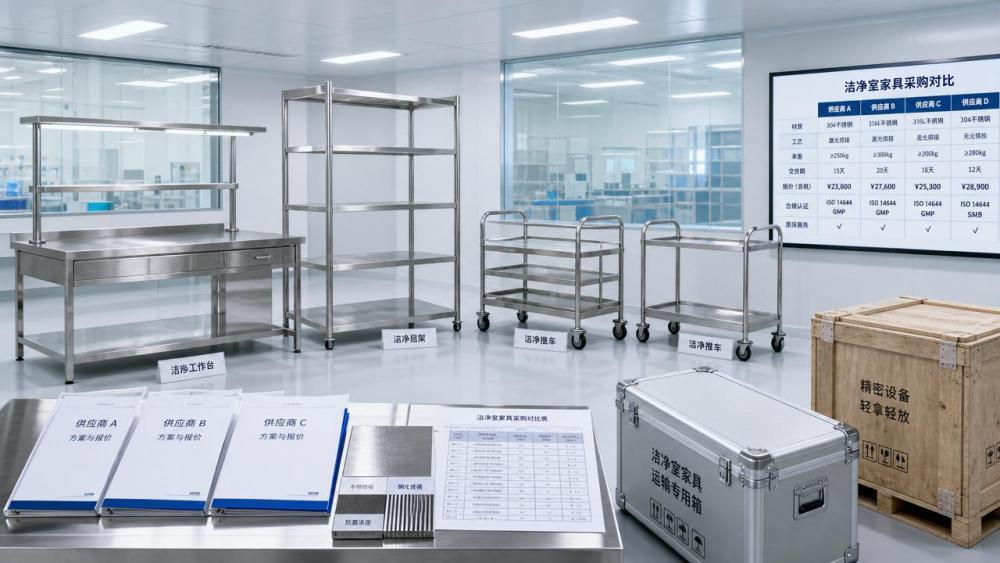
When buyers search for ways to compare biopharma cleanroom furniture wholesale quotes, the real question is not simply, “Which supplier is cheaper?” It is, “Which quote gives the best compliance, durability, delivery confidence, and lifecycle value for our cleanroom environment?” In biopharma settings, furniture affects contamination control, workflow efficiency, audit readiness, and maintenance costs.
That is why procurement teams should avoid comparing quotations line by line without first standardizing the technical and commercial basis. Two offers can look similar on paper while being completely different in material grade, fabrication quality, cleanability, documentation support, and after-sales responsiveness. The lowest initial quote can easily become the highest total-cost purchase if it leads to rework, delayed installation, non-compliance findings, or early replacement.
For most buyers, the key objective is to create an apples-to-apples comparison. That means checking whether each supplier is quoting the same product scope, the same compliance assumptions, the same finish specifications, the same packaging and shipping terms, and the same warranty obligations. Only then does the quoted price become meaningful.
Start with a clear technical specification before you compare prices
The fastest way to receive confusing or misleading wholesale quotations is to send vague requirements. If one supplier assumes standard stainless steel benches and another assumes fully welded cleanroom-grade furniture with radius edges and heavy-load casters, the prices will differ sharply for reasons that have nothing to do with competitiveness.
Before requesting quotes, procurement teams should define the use case in detail. Include furniture type, dimensions, load requirements, material grade, finish, mobility needs, shelf configuration, cleanroom classification, and whether the furniture will be used in production, gowning, airlock, lab, or packaging areas. In biopharma projects, intended use directly affects the required hygienic design level.
A good request for quotation should also state whether documentation is required, such as material certificates, weld maps, surface roughness verification, passivation records, factory inspection reports, or installation qualification support. Many quote gaps happen because one supplier includes documentation and another excludes it.
It is also wise to specify environmental conditions. Buyers should mention exposure to aggressive cleaning agents, frequency of sanitization, moisture levels, static control needs, and whether the furniture must support integration with existing cleanroom process equipment. These practical details help prevent under-specified products from appearing artificially low in price.
Check whether the material and finish truly fit biopharma requirements
Material selection is one of the biggest drivers of quote differences in biopharma cleanroom furniture wholesale purchasing. Stainless steel is common, but not all stainless steel furniture is equal. A quote based on 304 stainless steel may be suitable for many controlled environments, while some applications may require 316 or 316L for better corrosion resistance, especially where harsh disinfectants or specific process conditions are involved.
Buyers should also verify sheet thickness, tube wall thickness, and whether critical contact areas use stronger gauge materials. Lower-cost quotes sometimes reduce thickness to save cost, but this can affect stability, lifespan, and resistance to repeated cleaning. In high-use areas, weak structures often lead to vibration, deformation, or premature joint failure.
The finish matters just as much as the base material. For cleanroom use, furniture surfaces should be smooth, easy to sanitize, and resistant to particle accumulation. Ask whether surfaces are mechanically polished, brushed, or electropolished where required. Clarify whether welds are continuous and ground smooth, and whether corners are radiused to improve cleanability. These details may not always appear prominently in a sales quote, but they strongly affect suitability.
If a quote does not clearly define material grade and finish quality, procurement should treat that as a risk. A lower price with incomplete material disclosure is not a strong buying position. It is an invitation for disputes later, especially if the delivered furniture fails internal quality checks.
Compare compliance claims carefully, not just marketing language
Many suppliers use broad language such as “cleanroom compatible,” “GMP design,” or “biopharma grade.” Procurement professionals should not accept these labels at face value. Instead, ask what these claims mean in practice. Does the furniture design minimize crevices? Are there exposed fasteners? Are there hollow sections that are not sealed? Is the product intended for the cleanroom class you operate?
Biopharma buyers should look for evidence rather than generic statements. This may include design drawings, material certificates, quality control procedures, finish specifications, and references from comparable life sciences projects. For regulated operations, quote evaluation should consider whether the supplier can support audit documentation and change control requirements.
Compliance is not only about the product. It is also about the supplier’s manufacturing discipline. Ask whether the factory has defined inspection procedures, traceability systems, and documented quality management practices. A supplier that can consistently provide reliable records reduces procurement risk and supports smoother approval by engineering, quality assurance, and validation teams.
If you need installation in a validated facility, confirm whether the supplier understands site protocols such as packaging cleanliness, labeling, controlled delivery sequencing, and on-site assembly restrictions. These operational factors often separate experienced biopharma vendors from general industrial furniture sellers.
Identify hidden cost items that make one quote look cheaper than it really is
A common procurement mistake is to compare only the visible unit price. In wholesale buying, especially for cleanroom furniture, hidden cost items can significantly distort the commercial picture. A quote may appear low because important items are excluded, delayed, or shifted into later charges.
Review whether the quotation includes design finalization, shop drawings, mockup approval, customization, packaging suitable for cleanroom delivery, freight, insurance, duties, on-site assembly, installation tools, and post-installation adjustments. Even small omissions can become expensive when multiplied across a large project.
Buyers should also check minimum order quantities, spare parts pricing, accessory costs, and the supplier’s policy on replacement for transit damage or manufacturing defects. If the quote includes mobile units, ask whether casters, brakes, and load ratings are fully specified. If shelving is included, verify whether shelves are solid, perforated, adjustable, or reinforced, because these options affect both price and function.
Another hidden cost area is project delay. A cheaper quote from a supplier with long or uncertain lead times may cause downstream construction or commissioning disruptions. In biopharma projects, schedule slippage can cost far more than the savings on the furniture itself. That is why lead time reliability deserves the same scrutiny as headline pricing.
Evaluate customization needs without overpaying for nonessential features
Biopharma cleanroom furniture often requires some degree of customization, but not every project needs a fully bespoke solution. Procurement professionals should separate essential modifications from nice-to-have additions. The goal is to pay for performance and fit, not complexity for its own sake.
Essential customization may include exact dimensions for room layout, pass-through compatibility, integrated drawers, ergonomic work heights, heavy-load designs, or compatibility with process containers and instruments. These changes can improve operational efficiency and may be worth the premium if they reduce workflow disruption or operator strain.
At the same time, buyers should ask whether certain custom requests can be achieved through modular standard designs rather than full redesign. Standardized platforms usually offer lower cost, shorter lead time, easier replacement, and lower engineering risk. A good supplier should be able to advise where standardization is possible without compromising cleanroom performance.
When reviewing quotes, compare customization charges carefully. Some suppliers price engineering transparently, while others bury it in unit cost. Ask for a breakdown showing tooling, design work, prototype changes, and quantity-based price reductions. This helps procurement negotiate better and identify whether costs are proportionate to actual value.
Use lead time, supply reliability, and logistics readiness as decision factors
In many projects, the best quote is the one that supports the schedule with the least uncertainty. Cleanroom furniture is often needed at a precise stage of facility fit-out, qualification, or expansion. Delays can affect room readiness, equipment installation sequencing, and production startup plans.
Procurement should ask each supplier to confirm production capacity, raw material availability, fabrication timeline, inspection timing, packaging method, and shipping route assumptions. If lead time is tight, request a milestone schedule rather than a single delivery promise. This makes it easier to assess whether the supplier has real execution discipline.
Wholesale orders also require attention to packaging and transport conditions. Furniture intended for controlled environments should arrive protected from damage, corrosion, and contamination. If the supplier uses poor packaging, the buyer may face cleaning burden, cosmetic rejection, or even unusable products on arrival. That risk should be part of quote evaluation.
For international sourcing, include customs handling, documentation accuracy, and communication responsiveness in your assessment. A vendor with slightly higher pricing but proven export execution may be the safer and ultimately cheaper option than a lower-priced supplier that struggles with cross-border fulfillment.
Assess supplier credibility beyond the sales quotation
Price and specification matter, but supplier reliability often decides whether the purchase succeeds. Procurement teams should investigate how the supplier performs after the order is placed. Strong vendors communicate clearly, manage changes professionally, document deviations, and resolve issues quickly.
Ask for references from pharmaceutical, biotech, laboratory, or controlled-environment projects of similar scale. Review case studies if available. Find out how long the supplier has been producing cleanroom furniture and whether biopharma is a regular business segment or only an occasional one. Specialized experience usually translates into fewer design mistakes and better understanding of hygiene expectations.
It is also valuable to assess responsiveness during the quotation stage. Suppliers that answer technical questions thoroughly, revise layouts promptly, and clarify exclusions openly are often easier to work with later. In contrast, vague answers, incomplete revisions, and inconsistent documentation during bidding may signal larger execution risks.
If the order value is significant, consider a factory audit or virtual production review. Even a structured supplier evaluation checklist can reveal important differences in manufacturing capability, finishing consistency, and quality assurance maturity.
Build a practical quote comparison matrix for internal approval
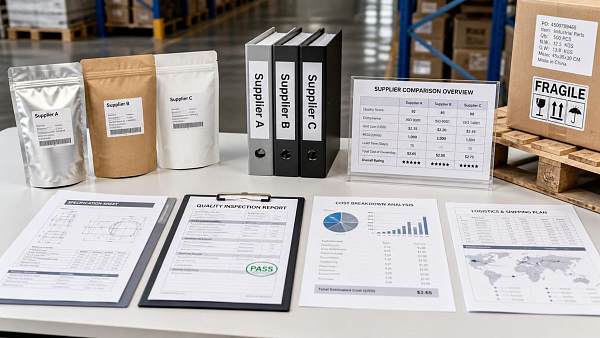
One of the most effective ways to compare biopharma cleanroom furniture wholesale offers is to use a weighted scorecard. This helps procurement explain decisions internally and avoid overemphasizing unit price. It also creates alignment with engineering, operations, and quality teams.
Your matrix can include price, compliance fit, material quality, finish quality, customization capability, documentation support, lead time, warranty, supplier experience, and logistics reliability. Assign weightings based on project priorities. For example, a regulated production cleanroom may give more weight to compliance and documentation, while a warehouse-adjacent support area may prioritize durability and cost control.
Use the matrix to record exclusions, assumptions, and commercial risks for each supplier. This step is especially important when quotes differ in structure. Some suppliers present detailed pricing; others provide broad totals. A standardized comparison sheet makes hidden differences visible and improves negotiation leverage.
Internal stakeholders often approve purchases faster when procurement can show a disciplined evaluation process. Instead of saying, “This supplier was not the cheapest, but we prefer them,” you can demonstrate that the selected vendor offers lower lifecycle risk, stronger schedule confidence, and better technical alignment with site needs.
Questions buyers should ask before making the final supplier decision
Before awarding the order, procurement should close all critical gaps in writing. Ask the supplier to confirm final material grade, finish standard, load rating, dimensions, documentation package, packaging method, lead time, warranty terms, and responsibility for nonconforming items. If installation is included, clarify access conditions, labor scope, and handover criteria.
It is also smart to ask what could delay the order and what assumptions the quote depends on. For example, does the supplier need final approved drawings by a certain date? Are there minimum batch quantities for custom pieces? Will any imported components create supply risk? These questions help prevent unpleasant surprises after purchase order release.
Where possible, request sample photos, finish samples, or a pilot unit for larger projects. Visual confirmation can uncover issues that paperwork does not reveal, such as rough weld finishing, awkward shelf geometry, or inadequate caster quality. For high-value or multi-room installations, a prototype review is often a worthwhile safeguard.
Finally, align payment terms with risk. If the order includes custom manufacturing, structure milestones around drawing approval, production progress, inspection, and delivery rather than paying too much upfront. Good commercial discipline protects both budget and project timing.
Conclusion
Comparing biopharma cleanroom furniture wholesale quotes is really an exercise in risk control and value analysis, not just price shopping. The best procurement decision comes from understanding what each supplier is truly offering in terms of material quality, hygienic design, compliance support, customization, lead time, and execution reliability.
For procurement professionals, the strongest approach is to define specifications clearly, standardize quote comparisons, investigate hidden costs, and evaluate supplier credibility with the same seriousness as unit pricing. When that process is followed, buyers can reduce operational surprises, support cleanroom performance, and achieve better long-term purchasing results.
In short, do not ask only which quote is lowest. Ask which quote is complete, compliant, dependable, and aligned with the real demands of a biopharma environment. That is how wholesale purchasing decisions create lasting value.
Related News
- 00
0000-00
Novec Cleanroom Fire Suppression: How to Assess Residue, Downtime, and Room Integrity - 00
0000-00
How to Qualify a Portable Particle Counter Supplier for GMP Cleanroom Monitoring - 00
0000-00
How to Set Cleanroom Environmental Alert Limits for Lithography Yield Control - 00
0000-00
What ISO 5 Cleanroom Garments Do You Need for Controlled Environments? - 00
0000-00
How to Prevent Humidity Control Alerts in Lithography Cleanroom Environments
Lina Clean
Weekly Insights
Stay ahead with our curated technology reports delivered every Monday.
News Recommendations
The five pillar industries provide end-to-end industry intelligence.
 Author :Dr. Elena BioLabeling Compliance Requirements: A Reference Guide for GMP Fill-Finish OperationsCompliance reference guide labeling requirements for GMP fill-finish operations—strengthen label control, traceability, reconciliation, and deviation prevention.
 Author :Lina CleanNovec Cleanroom Fire Suppression: How to Assess Residue, Downtime, and Room IntegrityNovec cleanroom fire suppression: assess residue, downtime, enclosure integrity, airflow control, and recovery planning to protect critical operations.
 Author :Dr. Elena BioSupplier Capability Evaluation Audits: Criteria for Reducing Supply Chain RiskSupplier capability evaluation audit criteria help procurement teams verify capacity, quality, compliance, and resilience—reducing supply chain risk before approval.
 Author :Dr. Elena BioHow to Set Agricultural pH Level Specifications for Soil and Irrigation WaterAgricultural specification guide pH level: set practical soil and irrigation water limits, improve nutrient efficiency, protect equipment, and reduce crop risks.
 Author :Lina CleanHow to Qualify a Portable Particle Counter Supplier for GMP Cleanroom MonitoringChoose a portable particle counter supplier with proven GMP calibration traceability, data integrity, responsive service, and lifecycle value for reliable cleanroom monitoring.
 Author :Dr. Aris ChemHow Polycarboxylate Superplasticizers Cut Concrete Water Demand Without Sacrificing StrengthConcrete water reduction ratio polycarboxylate solutions help lower water demand while preserving strength, workability, stability, and production reliability. Explore smarter PCE evaluation.
 Author :Dr. Hideo TanakaSelecting ATEX Pressure Sensors for Zone-Classified Gas and Dust EnvironmentsATEX pressure sensor selection guide for Zone-classified gas and dust environments. Explore Ex markings, temperature limits, protection methods, and certified installation essentials.
 Author :Vibration AnalyzersIP67 vs IP69K Sensor Ratings: Selecting Protection for Middle East Dust and WashdownIP67 vs IP69K sensor rating Middle East: compare dust, immersion and hot washdown protection to select reliable sensors for demanding regional conditions.
 Author :Dr. Elena BioChemical Industry Outlook: Feedstock Costs, Supply Risks, and Demand SignalsChemical industry outlook: assess feedstock costs, supply risks, and demand signals to strengthen sourcing, pricing, inventory, and resilient growth.
 Author :Vibration AnalyzersHow to Select an Edge Computing Sensor Gateway for Low-Latency Industrial MonitoringEdge computing sensor gateway selection guide for low-latency industrial monitoring. Compare compatibility, reliability, security, and integration to improve uptime.
 Author :Dr. Elena BioFood Packaging Policy Updates: What Compliance Teams Must Track in 2026Food packaging policy updates for 2026: build a market-ready compliance system for food contact safety, recycled content, labeling, supplier evidence, and packaging claims.
 Author :Dr. Aris ChemMortar Bond Strength Test: Methods, Failure Modes, and Acceptance CriteriaMortar bond strength test guide: compare methods, interpret failure modes, and set project-specific acceptance criteria for reliable masonry performance.
 Author :Vibration AnalyzersSmart Factory Automation News: Which Investment Signals Matter to Discrete Manufacturers?Smart factory automation news: discover the investment signals that help discrete manufacturers improve quality, flexibility, uptime, and ROI without costly disruption.
 Author :Dr. Elena BioHow to Evaluate Fishery Technology Suppliers in Europe for Fleet Upgrade ProjectsFishery technology supplier Europe guide: evaluate fleet upgrade partners for compatibility, compliance, lifecycle cost, service coverage, data security, and risk-adjusted value.
 Author :Dr. Elena BioSingle-Use Bioreactor Cost: What Drives Pricing and Total Cost of Ownership?Single use bioreactor cost explained: compare purchase price, bag expenses, automation, service, and total cost of ownership for smarter procurement decisions.
 Author :Dr. Elena BioAgricultural Specification Guide: What pH Levels Do Different Crops Need?Agricultural specification guide pH level: discover ideal soil pH ranges for major crops, avoid nutrient lock-up, and improve yield with smarter testing and amendments.
 Author :Dr. Aris ChemHow to Evaluate a Powder Polycarboxylate Ether Factory for Reliable Concrete SupplyEvaluate a powder polycarboxylate ether factory with practical guidance on quality control, concrete compatibility, supply reliability, and total cost performance.
 Author :Dr. Aris ChemConcrete Strength Price: How Mix Grade, Cement Content, and Admixtures Affect CostConcrete strength price explained: compare mix grade, cement content, aggregates, admixtures, and delivery costs to secure reliable performance and better value.
 Author :Dr. Aris ChemSelf-Leveling Flowability Metrics: How to Predict Spread and Placement StabilitySelf-leveling flowability metrics reveal how spread, flow retention, rheology, and segregation resistance shape stable placement—explore a practical evaluation framework.
 Author :Dr. Elena BioHow to Evaluate an Industrial Supplier Directory for Reliable Sourcing DecisionsIndustrial sourcing information helps buyers assess supplier directory quality, verify lead relevance, and make smarter, lower-risk sourcing decisions. Discover practical evaluation steps.
 Author :Lina CleanHow to Evaluate Low Energy Cleanrooms for HVAC Efficiency and Airflow ControlLow energy cleanrooms: learn how to evaluate HVAC efficiency, airflow, pressure cascades, recovery tests, and lifecycle costs for reliable contamination control.
 Author :Dr. Elena BioSupplier Capability Assessment Criteria: A Practical Scorecard for Procurement TeamsSupplier capability assessment criteria: build a practical procurement scorecard to verify quality, capacity, traceability, delivery resilience, and supplier risk controls.
 Author :Lina CleanHEPA Filtration in Europe: Which EN 1822 Requirements Matter for Cleanroom Projects?HEPA filtration Europe guide: understand EN 1822 H13/H14 requirements, MPPS testing, leak scans and cleanroom integrity checks for confident project specifications.
 Author :Dr. Elena BioSupplier Capability Assessment Checklist: 12 Criteria to Reduce Sourcing RiskSupplier capability assessment checklist: explore 12 essential criteria to evaluate quality, capacity, compliance, traceability, and delivery reliability—reduce sourcing risk and build resilient supplier partnerships.
 Author :Lina CleanHow to Set Cleanroom Environmental Alert Limits for Lithography Yield ControlLithography environment control alerts for cleanroom yield: learn to set warning and action limits that detect drift early, reduce false alarms, and protect wafers.
 Author :Dr. Elena BioAgriculture Supply Chain News: What Disruptions Mean for Crop Input BuyersAgriculture supply chain news helps crop input buyers manage fertilizer, seed, pesticide, and logistics disruptions with smarter sourcing strategies and stronger supply resilience.
 Author :Marcus AeroEurope Aviation MRO Market Trends 2026: What Airlines and Suppliers Should WatchAviation MRO market trends 2026 Europe reveal where engine bottlenecks, labor shortages, digital upgrades, and supplier partnerships will reshape airline costs, capacity, and competitive advantage.
 Author :Dr. Elena BioHow to Evaluate Wastewater Treatment Solutions for Compliance, Cost, and Site NeedsSolution evaluation resources for wastewater treatment: learn how to compare compliance, lifecycle cost, and site constraints to choose reliable systems with less risk.
 Author :Dr. Elena BioWhat Procurement Product Evaluation Resources Help Buyers Compare Vendors Faster?Procurement product evaluation resources help buyers compare vendors faster with spec sheets, scorecards, cost models, and compliance checks that reduce risk, delays, and hidden costs.
 Author :Dr. Aris ChemHow Insulation R-Value Affects Chemical Processing Energy Costs and ROIInsulation r-value chemical metrics cost analysis shows how better insulation cuts energy spend, improves process stability, and delivers faster ROI in chemical processing.
 Author :Marcus AeroLightweight Material Innovations in Manufacturing: What Engineers Should WatchLightweight material innovations news manufacturing: explore which composites, alloys, and bio-based polymers are truly production-ready, lower risk, and worth engineers’ attention now.
 Author :Dr. Elena BioCrop Input Buyer Guide: How to Compare Fertilizer, Seed, and Chemical OptionsCrop input buyer guide for smarter fertilizer, seed, and chemical decisions. Compare real cost, field performance, compliance, and supplier reliability to protect farm margins.
 Author :Dr. Elena BioHow to Evaluate Animal Nutrition Purchasing Specifications for Ingredient QualityPurchasing specification resources animal nutrition teams use should define quality, safety, traceability, and receiving standards—learn how to compare ingredient specs and avoid costly sourcing mistakes.
 Author :Dr. Elena BioHow to Evaluate Animal Feed Additives for Livestock Performance and Cost ControlAnimal feed additives: learn how to compare function, inclusion cost, performance impact, and supplier reliability to improve livestock results and control feed spend.
 Author :Marcus AeroHow to Use Airframe Fastener Fatigue Data to Predict Joint Life and Inspection IntervalsAirframe fastener fatigue data explained in a practical guide to predict joint life, assess crack growth, and set safer inspection intervals with more confidence.
 Author :Lina CleanChina Customs Launches Fast-Track Export Clearance for FFU and HEPA FiltersChina Customs launches fast-track export clearance for FFU and HEPA filters, targeting 48-hour processing at key ports. Explore how this pilot boosts compliance confidence and delivery predictability.
 Author :Marcus AeroHow to Evaluate an Aircraft Heat Exchanger Supplier for Aerospace ProgramsAircraft heat exchanger supplier selection can make or break aerospace programs. Learn how to assess compliance, quality systems, engineering depth, lead times, and total cost before award.
 Author :Lina CleanChina-UAE Direct Sea Route Cuts FFU and HEPA Lead Times by 7-10 DaysChina-UAE direct sea route cuts FFU and HEPA lead times by 7-10 days, helping Gulf buyers improve cleanroom supply planning, project timing, and delivery stability. Learn what it means now.
 Author :Dr. Elena BioFood Grade Plastics Compared: How to Evaluate Safety, Heat Resistance, and CostMaterial comparison guide for food grade plastics: compare safety, heat resistance, and cost to choose the best resin for your application.
 Author :Lina CleanChina Imposes Temporary Helium Export Controls, Raising Supply Chain Questions for FFU and HEPA MakersChina helium export controls raise urgent questions for FFU and HEPA makers. Learn how compliance, cleanroom testing, and delivery stability may be affected.