A professional information and consulting platform for agriculture, forestry, animal husbandry, fishery and related light industry sectors;

Chromatography skid wholesale: where spec mismatches start





In chromatography skid wholesale, costly problems often begin long before delivery—when specifications look aligned on paper but fail under real operating demands. For business evaluators comparing suppliers, understanding where these mismatches start is essential to controlling risk, protecting procurement value, and ensuring the system fits process goals, compliance needs, and long-term production efficiency.
Why specification risk is becoming a bigger issue in chromatography skid wholesale
A clear shift is taking place across process equipment sourcing: buyers are no longer evaluating only price, lead time, and basic capacity. In chromatography skid wholesale, the market is moving toward tighter fit-for-purpose review because production environments are changing faster than standard equipment documents. This matters across agriculture-derived bioproducts, feed additives, fermentation ingredients, natural extracts, fishery processing inputs, and light industrial purification lines where process variability is high and expansion plans often evolve after procurement starts.
The result is a growing gap between nominal compliance and operational suitability. A skid can meet a requested flow range, include the expected pumps and valves, and still underperform once buffer switching frequency, viscosity, CIP strategy, automation logic, resin compatibility, or future batch scale-up are tested in practice. For business evaluators, this is the core trend signal: specification mismatch is no longer a minor technical inconvenience; it is becoming a procurement risk multiplier that affects commissioning, validation, throughput, and asset utilization.
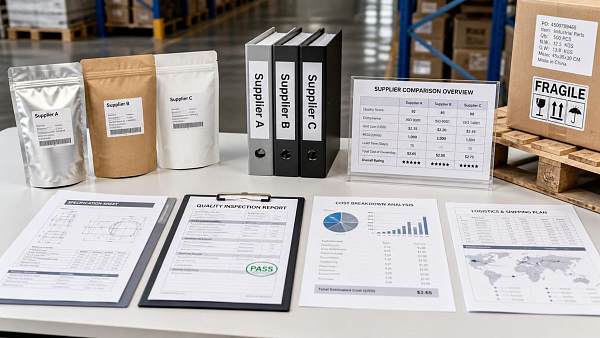
Another important change is that supplier proposals in chromatography skid wholesale increasingly look similar at summary level. Many quotations present equivalent-sounding materials, control systems, and performance claims. Yet underneath those similarities, differences in engineering assumptions can be substantial. That is where wholesale comparison becomes difficult and where poor decisions often begin—during bid normalization, not during factory acceptance.
What is changing in buyer expectations and supplier proposals
Procurement teams are asking more from suppliers than they did a few years ago. They want not only a machine, but also process stability, data traceability, easier maintenance, cleaner documentation, and lower lifetime adjustment cost. At the same time, suppliers are serving a wider range of industries with more modular offerings. This combination creates efficiency, but it also increases the chance that one standardized skid is stretched across applications that actually require different design priorities.
This trend is especially relevant when chromatography systems support expanding product portfolios. A plant may start with one extract, one protein fraction, or one specialty ingredient, but later move into multiple purification recipes. If the wholesale buying decision focused only on current use, the skid may quickly become a bottleneck.

Where spec mismatches usually start before purchase orders are signed
Most failures in chromatography skid wholesale begin with assumptions that stay unchallenged because they seem reasonable during procurement. These assumptions often come from generic URS language, copied specifications, or line-item comparison methods that simplify too early. Business evaluators should pay attention to the points where “technically acceptable” hides major execution risk.
Process assumptions are simplified too early
Feed composition, temperature swing, conductivity range, cleaning chemistry, and allowable hold-up volume may be treated as secondary details. In reality, these factors drive pump selection, valve life, sensor placement, and piping design. A proposal built around average conditions can fail under start-up, campaign changeover, or seasonal raw material variation.
Control scope is underdefined
Many buyers in chromatography skid wholesale focus on PLC brand, HMI presence, and basic recipe capability. The stronger indicator is whether the control philosophy reflects real plant operations. If interlocks, manual override logic, CIP transitions, buffer selection sequences, and data handling are vague, the skid may require expensive reprogramming later.
Mechanical compatibility is confused with hygienic suitability
Material grade alone does not guarantee long-term suitability. Surface finish, dead leg control, drainability, gasket selection, elastomer compatibility, and welding documentation affect both performance and audit readiness. This issue is growing in importance as more buyers expect the same skid to serve both production and regulated quality environments.
Scale-up and future use are missing from current specifications
A skid ordered for one throughput target may later need additional column configurations, upstream coordination, or downstream integration. If no room is left in pump sizing, utility capacity, software architecture, or skid footprint planning, the buyer ends up paying twice: once for the original system and again for modifications.
The main drivers behind these mismatches
The increase in specification mismatch is not random. It reflects broader changes in industrial sourcing, technology packaging, and cross-sector demand. In chromatography skid wholesale, several drivers stand out.
- More projects are launched under time pressure, so requirements are frozen before process learning is complete.
- Standardized skid platforms help suppliers quote quickly, but can conceal application-specific limits.
- Buyers often compare offers through spreadsheet parity, which rewards visible features over hidden engineering depth.
- Operations, engineering, quality, and procurement may review the project separately rather than through a shared risk lens.
- In sectors linked to agricultural and biological processing, feedstock variability makes static specifications less reliable.
These drivers explain why chromatography skid wholesale can become riskier even when supplier choice appears broad and technical documents look mature. More options do not automatically mean better fit. They often require more disciplined interpretation.
Who feels the impact most when wholesale specifications drift from reality
The consequences of a poor wholesale decision are distributed across the business. Some impacts appear immediately in commissioning; others surface months later in maintenance, yield loss, or expansion constraints. For business evaluators, understanding the impact chain is essential because the cheapest quotation can trigger the highest total exposure.
In practical terms, the strongest warning sign in chromatography skid wholesale is when one team sees the offer as complete while another team still sees unresolved assumptions. That disconnect usually predicts downstream cost.
What signals business evaluators should watch now
The market is not necessarily becoming less reliable, but evaluation standards need to become sharper. Several signals deserve ongoing attention when assessing suppliers or screening wholesale opportunities.
Signal 1: Documentation depth differs more than brochure quality suggests
A polished proposal can still omit assumptions around utility quality, calibration philosophy, software hierarchy, and skid boundary definition. Ask what is guaranteed, what is typical, and what is customer-supplied. In chromatography skid wholesale, clarity around boundaries is often a stronger predictor of success than presentation style.
Signal 2: “Customizable” may mean configurable, not engineered
Suppliers may be able to swap options without revisiting process logic. That is efficient for standard use cases, but risky for demanding purification workflows. Evaluators should test whether proposed customization affects pump curves, valve sequencing, pressure control, skid layout, or software architecture in a meaningful way.
Signal 3: After-sales competence is becoming part of the original specification value
As controls and compliance expectations become more complex, post-installation support is no longer separate from procurement quality. In chromatography skid wholesale, response capability for commissioning, troubleshooting, documentation updates, and spare parts planning should be treated as part of fit assessment.
A stronger evaluation approach for the next buying cycle
To adapt to current market conditions, buyers need an evaluation method that goes beyond line-by-line quotation comparison. The goal is not to make sourcing slower, but to make risk visible earlier.
- Separate mandatory performance requirements from assumed operating habits.
- Ask suppliers to state design assumptions explicitly, especially around cleaning, feed variability, and future throughput.
- Review automation logic with operations, not only with engineering.
- Map documentation needs to actual audit or internal release requirements.
- Score lifetime adaptability, not just initial capex and lead time.
This approach is particularly valuable in sectors tied to agricultural processing, natural product extraction, feed and nutrition ingredients, fermentation outputs, and fishery-related value-added products, where process conditions can shift with raw material supply and market demand. In those settings, chromatography skid wholesale decisions should be judged by resilience as much as by immediate fit.
How the next phase of the market is likely to develop
Looking ahead, the market direction suggests more convergence between modular hardware, digital controls, and documented process intent. Buyers will likely demand earlier visibility into assumptions, while suppliers with strong application engineering will differentiate themselves from those relying mainly on generic platform selling. That means future competition in chromatography skid wholesale may shift away from headline equipment similarity and toward proof of operational fit.
Another probable change is that procurement teams will involve operations and quality earlier in technical review, especially for systems expected to support multiple product paths. This is a practical response to rising rework costs and tighter launch schedules. Evaluators who can translate process uncertainty into specification questions will become more valuable than those who only normalize pricing tables.
What to confirm before moving forward
If a company wants to understand how current trends in chromatography skid wholesale affect its own purchasing decisions, the most useful next step is to confirm a short list of high-impact questions. Are the operating conditions defined by real extremes or by averages? Is the automation scope aligned with plant reality? Does the documentation package support the required release and audit process? Can the skid adapt to future scale, recipe, or integration changes without structural redesign? And does the supplier’s support model reduce commissioning uncertainty or simply transfer it back to the buyer?
Those questions help turn market observation into practical judgment. In an environment where specification mismatches increasingly start before equipment is built, the strongest procurement advantage is not faster approval—it is earlier recognition of what the documents do not yet prove.
Related News
- 00
0000-00
FDA Revises GMP Metrics Draft for Purification Skids - 00
0000-00
Ingredient Information Wholesale: What Buyers Should Verify Before Placing Bulk Orders - 00
0000-00
Ultrafiltration Flux Rate in Europe: What Affects Performance Across Water Quality Conditions - 00
0000-00
FDA Import Alert Adds ISO 13485 Hold for Purification Parts - 00
0000-00
FDA Tightens Entry Rules for Purification Skids
Dr. Elena Bio
Weekly Insights
Stay ahead with our curated technology reports delivered every Monday.
News Recommendations
The five pillar industries provide end-to-end industry intelligence.
 Author :Dr. Elena BioSupplier Capability Evaluation Audits: Criteria for Reducing Supply Chain RiskSupplier capability evaluation audit criteria help procurement teams verify capacity, quality, compliance, and resilience—reducing supply chain risk before approval.
 Author :Dr. Elena BioHow to Set Agricultural pH Level Specifications for Soil and Irrigation WaterAgricultural specification guide pH level: set practical soil and irrigation water limits, improve nutrient efficiency, protect equipment, and reduce crop risks.
 Author :Lina CleanHow to Qualify a Portable Particle Counter Supplier for GMP Cleanroom MonitoringChoose a portable particle counter supplier with proven GMP calibration traceability, data integrity, responsive service, and lifecycle value for reliable cleanroom monitoring.
 Author :Dr. Aris ChemHow Polycarboxylate Superplasticizers Cut Concrete Water Demand Without Sacrificing StrengthConcrete water reduction ratio polycarboxylate solutions help lower water demand while preserving strength, workability, stability, and production reliability. Explore smarter PCE evaluation.
 Author :Dr. Hideo TanakaSelecting ATEX Pressure Sensors for Zone-Classified Gas and Dust EnvironmentsATEX pressure sensor selection guide for Zone-classified gas and dust environments. Explore Ex markings, temperature limits, protection methods, and certified installation essentials.
 Author :Vibration AnalyzersIP67 vs IP69K Sensor Ratings: Selecting Protection for Middle East Dust and WashdownIP67 vs IP69K sensor rating Middle East: compare dust, immersion and hot washdown protection to select reliable sensors for demanding regional conditions.
 Author :Dr. Elena BioChemical Industry Outlook: Feedstock Costs, Supply Risks, and Demand SignalsChemical industry outlook: assess feedstock costs, supply risks, and demand signals to strengthen sourcing, pricing, inventory, and resilient growth.
 Author :Vibration AnalyzersHow to Select an Edge Computing Sensor Gateway for Low-Latency Industrial MonitoringEdge computing sensor gateway selection guide for low-latency industrial monitoring. Compare compatibility, reliability, security, and integration to improve uptime.
 Author :Dr. Elena BioFood Packaging Policy Updates: What Compliance Teams Must Track in 2026Food packaging policy updates for 2026: build a market-ready compliance system for food contact safety, recycled content, labeling, supplier evidence, and packaging claims.
 Author :Dr. Aris ChemMortar Bond Strength Test: Methods, Failure Modes, and Acceptance CriteriaMortar bond strength test guide: compare methods, interpret failure modes, and set project-specific acceptance criteria for reliable masonry performance.
 Author :Vibration AnalyzersSmart Factory Automation News: Which Investment Signals Matter to Discrete Manufacturers?Smart factory automation news: discover the investment signals that help discrete manufacturers improve quality, flexibility, uptime, and ROI without costly disruption.
 Author :Dr. Elena BioHow to Evaluate Fishery Technology Suppliers in Europe for Fleet Upgrade ProjectsFishery technology supplier Europe guide: evaluate fleet upgrade partners for compatibility, compliance, lifecycle cost, service coverage, data security, and risk-adjusted value.
 Author :Dr. Elena BioSingle-Use Bioreactor Cost: What Drives Pricing and Total Cost of Ownership?Single use bioreactor cost explained: compare purchase price, bag expenses, automation, service, and total cost of ownership for smarter procurement decisions.
 Author :Dr. Elena BioAgricultural Specification Guide: What pH Levels Do Different Crops Need?Agricultural specification guide pH level: discover ideal soil pH ranges for major crops, avoid nutrient lock-up, and improve yield with smarter testing and amendments.
 Author :Dr. Aris ChemHow to Evaluate a Powder Polycarboxylate Ether Factory for Reliable Concrete SupplyEvaluate a powder polycarboxylate ether factory with practical guidance on quality control, concrete compatibility, supply reliability, and total cost performance.
 Author :Dr. Aris ChemConcrete Strength Price: How Mix Grade, Cement Content, and Admixtures Affect CostConcrete strength price explained: compare mix grade, cement content, aggregates, admixtures, and delivery costs to secure reliable performance and better value.
 Author :Dr. Aris ChemSelf-Leveling Flowability Metrics: How to Predict Spread and Placement StabilitySelf-leveling flowability metrics reveal how spread, flow retention, rheology, and segregation resistance shape stable placement—explore a practical evaluation framework.
 Author :Dr. Elena BioHow to Evaluate an Industrial Supplier Directory for Reliable Sourcing DecisionsIndustrial sourcing information helps buyers assess supplier directory quality, verify lead relevance, and make smarter, lower-risk sourcing decisions. Discover practical evaluation steps.
 Author :Lina CleanHow to Evaluate Low Energy Cleanrooms for HVAC Efficiency and Airflow ControlLow energy cleanrooms: learn how to evaluate HVAC efficiency, airflow, pressure cascades, recovery tests, and lifecycle costs for reliable contamination control.
 Author :Dr. Elena BioSupplier Capability Assessment Criteria: A Practical Scorecard for Procurement TeamsSupplier capability assessment criteria: build a practical procurement scorecard to verify quality, capacity, traceability, delivery resilience, and supplier risk controls.
 Author :Lina CleanHEPA Filtration in Europe: Which EN 1822 Requirements Matter for Cleanroom Projects?HEPA filtration Europe guide: understand EN 1822 H13/H14 requirements, MPPS testing, leak scans and cleanroom integrity checks for confident project specifications.
 Author :Dr. Elena BioSupplier Capability Assessment Checklist: 12 Criteria to Reduce Sourcing RiskSupplier capability assessment checklist: explore 12 essential criteria to evaluate quality, capacity, compliance, traceability, and delivery reliability—reduce sourcing risk and build resilient supplier partnerships.
 Author :Lina CleanHow to Set Cleanroom Environmental Alert Limits for Lithography Yield ControlLithography environment control alerts for cleanroom yield: learn to set warning and action limits that detect drift early, reduce false alarms, and protect wafers.
 Author :Dr. Elena BioAgriculture Supply Chain News: What Disruptions Mean for Crop Input BuyersAgriculture supply chain news helps crop input buyers manage fertilizer, seed, pesticide, and logistics disruptions with smarter sourcing strategies and stronger supply resilience.
 Author :Marcus AeroEurope Aviation MRO Market Trends 2026: What Airlines and Suppliers Should WatchAviation MRO market trends 2026 Europe reveal where engine bottlenecks, labor shortages, digital upgrades, and supplier partnerships will reshape airline costs, capacity, and competitive advantage.
 Author :Dr. Elena BioHow to Evaluate Wastewater Treatment Solutions for Compliance, Cost, and Site NeedsSolution evaluation resources for wastewater treatment: learn how to compare compliance, lifecycle cost, and site constraints to choose reliable systems with less risk.
 Author :Dr. Elena BioWhat Procurement Product Evaluation Resources Help Buyers Compare Vendors Faster?Procurement product evaluation resources help buyers compare vendors faster with spec sheets, scorecards, cost models, and compliance checks that reduce risk, delays, and hidden costs.
 Author :Dr. Aris ChemHow Insulation R-Value Affects Chemical Processing Energy Costs and ROIInsulation r-value chemical metrics cost analysis shows how better insulation cuts energy spend, improves process stability, and delivers faster ROI in chemical processing.
 Author :Marcus AeroLightweight Material Innovations in Manufacturing: What Engineers Should WatchLightweight material innovations news manufacturing: explore which composites, alloys, and bio-based polymers are truly production-ready, lower risk, and worth engineers’ attention now.
 Author :Dr. Elena BioCrop Input Buyer Guide: How to Compare Fertilizer, Seed, and Chemical OptionsCrop input buyer guide for smarter fertilizer, seed, and chemical decisions. Compare real cost, field performance, compliance, and supplier reliability to protect farm margins.
 Author :Dr. Elena BioHow to Evaluate Animal Nutrition Purchasing Specifications for Ingredient QualityPurchasing specification resources animal nutrition teams use should define quality, safety, traceability, and receiving standards—learn how to compare ingredient specs and avoid costly sourcing mistakes.
 Author :Dr. Elena BioHow to Evaluate Animal Feed Additives for Livestock Performance and Cost ControlAnimal feed additives: learn how to compare function, inclusion cost, performance impact, and supplier reliability to improve livestock results and control feed spend.
 Author :Marcus AeroHow to Use Airframe Fastener Fatigue Data to Predict Joint Life and Inspection IntervalsAirframe fastener fatigue data explained in a practical guide to predict joint life, assess crack growth, and set safer inspection intervals with more confidence.
 Author :Lina CleanChina Customs Launches Fast-Track Export Clearance for FFU and HEPA FiltersChina Customs launches fast-track export clearance for FFU and HEPA filters, targeting 48-hour processing at key ports. Explore how this pilot boosts compliance confidence and delivery predictability.
 Author :Marcus AeroHow to Evaluate an Aircraft Heat Exchanger Supplier for Aerospace ProgramsAircraft heat exchanger supplier selection can make or break aerospace programs. Learn how to assess compliance, quality systems, engineering depth, lead times, and total cost before award.
 Author :Lina CleanChina-UAE Direct Sea Route Cuts FFU and HEPA Lead Times by 7-10 DaysChina-UAE direct sea route cuts FFU and HEPA lead times by 7-10 days, helping Gulf buyers improve cleanroom supply planning, project timing, and delivery stability. Learn what it means now.
 Author :Dr. Elena BioFood Grade Plastics Compared: How to Evaluate Safety, Heat Resistance, and CostMaterial comparison guide for food grade plastics: compare safety, heat resistance, and cost to choose the best resin for your application.
 Author :Lina CleanChina Imposes Temporary Helium Export Controls, Raising Supply Chain Questions for FFU and HEPA MakersChina helium export controls raise urgent questions for FFU and HEPA makers. Learn how compliance, cleanroom testing, and delivery stability may be affected.
 Author :Dr. Elena BioHow Single-Use Tech Impacts CDMO Efficiency, Cost, and Scale-Up DecisionsImpact of single-use tech on CDMO efficiency, cost, and scale-up decisions—discover key trade-offs, hidden savings, and smarter capacity planning.
 Author :Lina CleanChina's Helium Export Ban Puts FFU and HEPA Testing Under PressureChina’s helium export ban is pressuring FFU and HEPA testing, threatening calibration, certification, and delivery for exporters.